

What Is a Cone Air Filter?
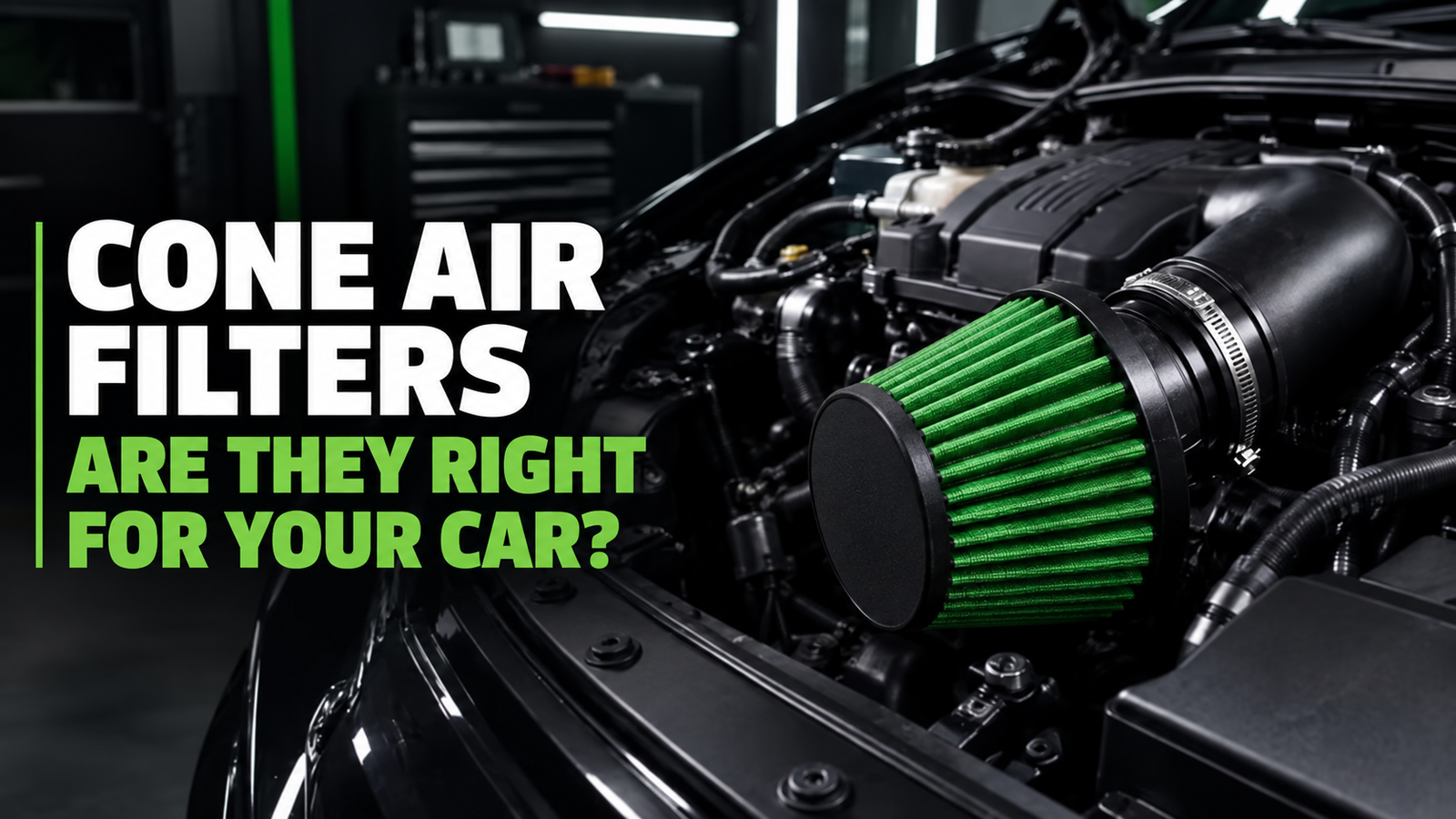
A cone air filter is an engine air filter with a tapered, cone-shaped design.
Unlike many panel filters that sit inside a factory air box, cone filters are often attached directly to an intake tube using a clamp or mounting flange.
They are commonly used in:
- Aftermarket intake systems
- Universal intake setups
- Custom engine-bay applications
- Modified vehicles
- Performance-oriented builds
The shape allows pleated filter media to wrap around the body of the filter while keeping the overall design relatively compact.
Its basic purpose is still the same as other engine air filters: filter the air entering the intake system while helping keep unwanted dirt and debris away from the engine.
Are Cone Air Filters Better Than Standard Air Filters?
Not automatically.
The shape of an air filter is only one part of the intake system.
A correctly sized cone filter can work well in an intake designed for it, while a poorly fitted or incorrectly sized filter may not be suitable at all.
When evaluating an engine air filter, important factors include:
- Filtration efficiency
- Airflow restriction
- Dust capacity
- Filter size
- Proper sealing
- Intake-system compatibility
These are also the types of performance characteristics considered in ISO 5011, an international standard used for laboratory testing of air cleaners for internal-combustion engines.
The standard focuses on factors such as airflow restriction, dust collection efficiency, and dust capacity.
Learn more about ISO 5011 air-cleaner testing
So, the better question is not simply, “Is a cone filter better?”
It is:
“Is this cone filter correctly sized and suitable for my intake system?”
When Does a Cone Air Filter Make Sense?
Cone filters are most useful when the intake system is designed to accept a clamp-on filter.
Aftermarket Intake Systems
Many aftermarket intake setups use a filter attached directly to an intake tube.
In these applications, the cone filter needs to match the tube diameter and fit securely without interfering with nearby engine-bay components.
Custom Intake Applications
Cone filters can also be useful for custom intake projects where a factory-style air box is not being used.
Different inlet diameters and overall filter sizes make universal filters useful when the application is measured carefully.
Limited Engine-Bay Space
A tapered filter may fit certain engine-bay layouts better than a large rectangular filter.
However, available space should always be measured rather than estimated.
How Do You Choose the Right Cone Air Filter?
The correct filter should be selected by measurements and application, not appearance.
Check the Inlet Diameter
The filter opening needs to match the intake tube where the filter will be installed.
If the filter cannot be mounted securely, it is not the correct fit.
Measure the Available Space
Check the space around the planned filter location.
Important measurements can include:
- Filter length
- Base diameter
- Top diameter
- Intake-tube diameter
- Hood clearance
- Distance from nearby hoses and wiring
- Clearance from other engine components
Green Filter's How to Measure Filter resource can help when selecting a filter by dimensions.
Confirm the Intake Setup
A universal cone filter should not be chosen without considering the rest of the intake system.
Make sure the installation provides a secure connection and that the filter is appropriate for the intake configuration.
Consider Driving Conditions
A vehicle driven mostly on clean paved roads may face different filtration demands than one frequently exposed to dust, dirt roads, or off-road conditions.
Filter selection and maintenance should make sense for how the vehicle is actually used.
Does a Bigger Cone Air Filter Mean Better Performance?
No.
A physically larger cone filter does not automatically make an intake system better.
The filter should have enough filtration area for the intended application, but size also needs to work with the intake tube, engine-bay space, and mounting location.
A large filter that does not fit correctly is not a useful upgrade.
The most practical approach is to choose a filter that offers:
- Correct inlet dimensions
- Secure fitment
- Suitable filter area
- Appropriate filtration
- Enough installation clearance
The overall intake setup matters more than simply choosing the biggest filter available.
Cone Air Filter vs Panel Air Filter
A cone filter and a panel filter mainly differ in their shape and how they are installed.
Panel Air Filter
A panel filter commonly sits inside the vehicle's original air-filter housing.
This design is often the simplest choice when keeping the factory intake system.
Cone Air Filter
A cone filter is commonly mounted directly to an intake tube.
It is often used in universal, aftermarket, or custom intake applications.
Neither shape is automatically the better option.
The right filter is the one that matches the vehicle and intake configuration.
What About Reusable Cone Air Filters?
Some cone filters are designed to be cleaned and reused.
That can make maintenance different from a disposable filter, but reusable filters still need proper care.
Always follow the instructions for the specific filter being used.
Do not assume that every reusable cone filter should be cleaned or oiled using the same method because filter construction and media can vary.
For Green Filter products, follow the reusable air filter cleaning guide for the recommended service process.
How Do You Know If a Cone Filter Fits Your Car?
Before buying a cone filter, ask these questions:
- Does the inlet diameter match the intake tube?
- Is there enough physical space for the filter?
- Can the filter be mounted securely?
- Is the intake designed for a clamp-on or universal filter?
- Can the filter be serviced correctly?
- Is it appropriate for the vehicle's driving conditions?
If you are looking for a vehicle-specific application rather than a universal filter, Green Filter's Shop by Vehicle page can help you find compatible options.
For custom applications, you can also explore Green Filter's universal cylinder filters and compare dimensions before choosing a filter.
Are Cone Air Filters Right for Your Car?
A cone air filter may be right for your car if the intake system is designed for one and the filter fits correctly.
They are especially useful in aftermarket, universal, and custom intake applications where a clamp-on filter is required.
However, if your vehicle uses a factory air box and you only need a direct replacement, a vehicle-specific filter may be the simpler choice.
The best decision comes down to four things:
fitment, intake design, filtration needs, and proper maintenance.
Choose the filter based on the application rather than shape alone.







Comments
Loading comments...
Leave a Comment