


The engine air filter cleans air entering the engine’s intake system, while the cabin air filter filters air passing through the heating, ventilation, and air conditioning (HVAC) system into the passenger compartment. They protect different systems, occupy different locations, and are not interchangeable. Replacing one does not service the other.
Knowing the difference helps you identify the correct part, understand maintenance recommendations, and avoid buying an engine filter when your concern is weak airflow from the dashboard vents.
What Does an Engine Air Filter Do?
An internal-combustion engine draws in air to burn fuel. The engine air filter captures dirt and other particles before that air travels farther through the intake system.
Effective filtration matters because airborne grit should not enter the engine. The filter also needs to allow the airflow required for normal operation. Correct fitment and a secure seal are essential: air leaking around the filter can bypass the media.
As debris accumulates, restriction can increase. A severely clogged filter may limit acceleration, particularly when the engine demands more air. That does not mean every dirty filter causes a noticeable driving problem.
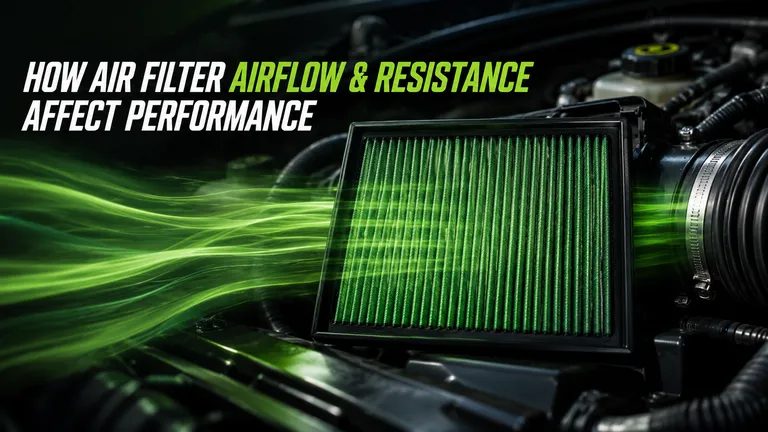
Green Filter’s guide to air filter airflow and resistance explains why airflow, filtration, and sealing must be considered together.
What Does a Cabin Air Filter Do?
The cabin air filter captures particles from air moving through the vehicle’s HVAC system. Depending on the ventilation design, filtration may apply to outside air, recirculated air, or both.
Standard particulate filters capture contaminants such as dust and pollen. Some cabin filters include activated carbon to help reduce certain odors. Toyota’s cabin-filter explanation distinguishes particle filtration from the additional odor-reduction function of charcoal media.
A cabin filter does not make the interior sterile or eliminate every pollutant. Its capabilities depend on its construction and condition.
When heavily clogged, it can reduce vent airflow. You might notice less air reaching the cabin despite the same fan setting. Installing a new engine air filter will not correct that restriction.
Where Are Engine and Cabin Air Filters Located?
The engine air filter is usually under the hood, inside a housing connected to the engine intake. Some aftermarket intakes use an exposed filter instead of the original enclosed airbox.
The cabin air filter is commonly behind the glove compartment, although other vehicles place it beneath the dashboard or near the cowl at the base of the windshield. Access can involve moving trim or removing a cover.
Check your owner’s manual before taking anything apart. Similar-looking vehicles can have different access procedures, and some HVAC systems contain more than one filter. greenfilter.com
Do not assume every car has exactly two air filters. Some older vehicles lack a replaceable cabin filter, while battery-electric vehicles have no combustion-engine intake filter. Equipment and filter arrangements vary.
Signs Your Engine or Cabin Air Filter Needs Attention
Engine air filter
Inspect the engine filter when scheduled service is due, after substantial dusty driving, or when you find excessive debris during routine maintenance.
Damage matters as well as dirt. Torn media, a distorted frame, or a compromised seal may require replacement even if the filter has not reached its normal service interval.
Significant restriction can contribute to sluggish acceleration. However, hesitation, rough running, and warning lights have many possible causes. A filter inspection is useful; it is not a complete diagnosis.
Cabin air filter
A restricted cabin filter may produce weaker ventilation airflow. Visible debris or persistent musty odors also justify an inspection.
Odors can originate elsewhere in the HVAC system, so replacement may not resolve every smell. Likewise, weak cooling with normal airflow can indicate a separate air-conditioning issue.
Describe the symptom precisely when requesting service: “less air from the vents” gives a technician different information from “the engine accelerates slowly.”
How Often Should You Replace or Clean Each Filter?
Follow your vehicle’s maintenance schedule and the installed filter’s instructions. There is no universal mileage interval for both filters.
Dusty roads, construction areas, and other demanding environments can justify earlier inspections. Hyundai’s cabin-filter maintenance guidance, for example, calls for more frequent inspection and earlier replacement under prolonged dusty or heavily polluted conditions.
Inspection and replacement are different decisions. Check condition when appropriate, but do not automatically replace both filters simply because one needs attention.
Disposable engine filters and most cabin filters are replaced rather than washed. Unless the manufacturer specifically permits cleaning, treat the media as non-washable.
Reusable engine filters need the prescribed service process. Green Filter’s official Cleaner & Care instructions specify its cleaner, gentle rinsing, natural drying, and re-oiling. Avoid strong detergents, high-pressure water, heat drying, and excess oil.
Plan for drying time before starting. Reinstalling a wet filter or improvising with unsuitable cleaning products can undermine proper maintenance.
Can You Use a Performance Engine Air Filter Instead of a Cabin Air Filter?
No. A performance engine air filter cannot substitute for a cabin air filter. The parts serve separate air paths and require different housings, dimensions, and sealing arrangements.
“Performance” describes an engine-filter product’s intended application; it does not make the filter suitable for cabin ventilation.
Green Filter USA offers washable, reusable engine air filters, including vehicle-specific and universal intake applications. These products should be selected for the engine intake they are designed to fit. They do not replace cabin-filter maintenance.
Choosing the Right Engine Air Filter for Your Vehicle
Start with the vehicle’s year, make, model, and engine. If the intake has been modified, confirm compatibility with that intake rather than relying only on the original vehicle specification.
A filter should seat correctly and allow the housing to close securely. Inspect the sealing area and follow the installation instructions.
Choose between disposable and reusable options based on the application and the maintenance you are prepared to perform. A reusable filter requires cleaning time and, for an oiled design, correct oil application.
Green Filter’s engine air filter replacement guide provides additional fitment guidance. Its reusable cotton-gauze filters offer an alternative to repeated disposable-filter replacement where a compatible application is available.
Do not choose solely by a horsepower or MPG claim. Filtration, fit, and maintenance remain essential.
Which filter should I replace first?
Prioritize a damaged filter or one due for service. Otherwise, inspect the filter associated with the symptom: engine intake for significant restriction concerns, cabin filtration for reduced vent airflow. Service both if both need attention.
Final Thoughts
The engine air filter serves the engine intake; the cabin air filter serves passenger ventilation. Identify the correct system, consult the maintenance schedule, and use the care procedure appropriate for the installed filter.
For a washable engine-filter option, use Green Filter USA’s Shop by Vehicle tool to check compatible applications for your year, make, model, and engine.








Comments
Loading comments...
Leave a Comment