


A dirty engine air filter can hurt gas mileage in an older carbureted vehicle. In modern fuel-injected gasoline vehicles, replacing a clogged filter generally improves acceleration rather than fuel economy. If your MPG has dropped, inspect the filter, but investigate other causes too.
The relationship between a dirty air filter and gas mileage depends on how your engine controls fuel delivery. Understanding that difference can help you maintain your vehicle without buying a filter expecting fuel savings it may not deliver.
Can a Dirty Air Filter Affect Gas Mileage?
The U.S. Department of Energy and EPA’s vehicle maintenance guidance distinguishes computer-controlled gasoline engines and diesels from older carbureted engines. For modern vehicles, it identifies acceleration as the potential benefit of replacing a clogged filter, rather than improved MPG.
That does not make filter maintenance optional. An excessively restricted intake can limit performance, while damaged filter media or a poor seal creates a separate filtration concern.
Also, “dirty” and “clogged” are not interchangeable. A filter collects dirt as part of its job. Some visible dust does not establish that it is restricting airflow enough to affect operation.
Why Modern and Older Engines Behave Differently
Modern Fuel-Injected Gasoline Engines
Modern engine management uses sensor information to adjust fuel delivery to operating conditions. Reduced intake airflow does not automatically make the engine keep supplying the same amount of fuel.
An Oak Ridge National Laboratory study published by SAE examined four modern gasoline vehicles and a carbureted 1972 vehicle. The modern group included port-injected engines and a turbocharged direct-injection engine.
The researchers found insignificant fuel-economy sensitivity to filter condition in the modern vehicles tested, while clogged filters penalized acceleration in all five vehicles.
Those findings explain why a car may accelerate better after filter service without traveling farther on each gallon. They do not establish results for every vehicle, modification, or mechanical fault.
Older Carbureted Engines
A carburetor meters fuel differently and lacks the same electronic feedback control. Intake restriction can alter mixture behavior and affect fuel consumption.
For an older carbureted car with a restricted filter, replacement may therefore improve both economy and acceleration. The size of any improvement depends on the vehicle and filter condition; a universal percentage would be misleading.
Diesel Engines
FuelEconomy.gov also states that replacing a clogged filter in diesel engines can improve acceleration without improving fuel economy. Follow the maintenance requirements for your particular diesel rather than assuming gasoline-engine service intervals apply.
How Airflow Restriction Affects Performance
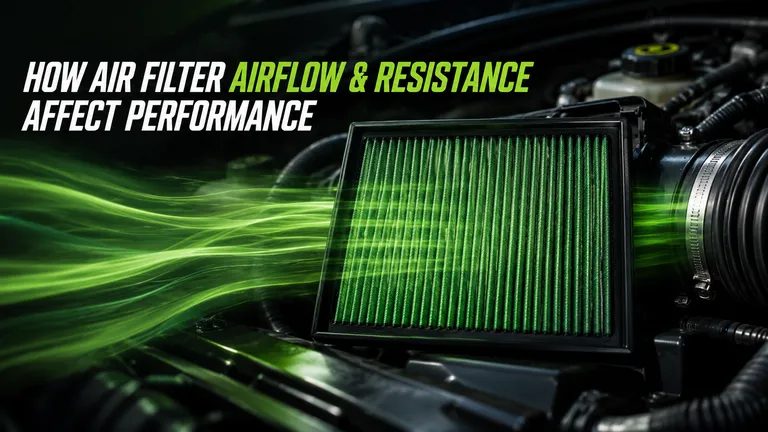
An engine air filter must let air pass while capturing contaminants. As debris accumulates, resistance can increase.
Under high airflow demand, severe restriction can limit the air available to produce power. A driver might notice weaker acceleration when merging, passing, or climbing a hill.
Keep three ideas separate:
- Fuel economy: How far the vehicle travels per gallon.
- Acceleration: How quickly vehicle speed increases.
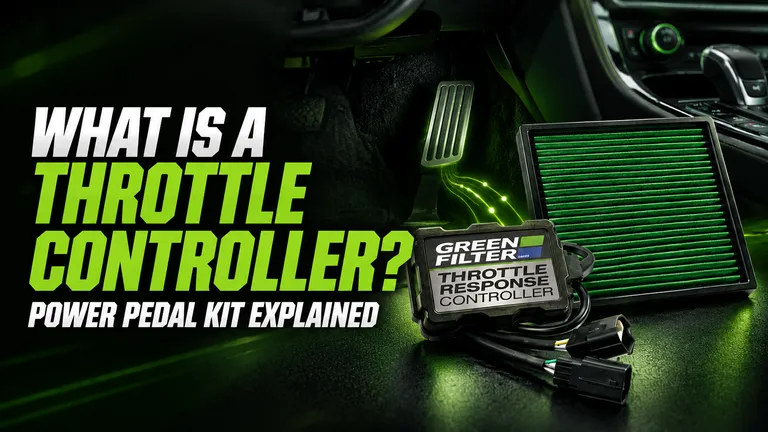
- Throttle response: How promptly the vehicle responds to accelerator input.
An improvement in one does not prove an improvement in the others. Green Filter’s airflow and resistance guide explains the intake side of this distinction in more detail.
What Symptoms Justify Checking the Filter?
Inspect the engine filter if acceleration has become sluggish, service history is unknown, or the vehicle regularly encounters dust.
During inspection, look for:
- Heavy debris accumulation or an obstructed air-box inlet.
- Torn media, distorted edges, or a damaged sealing surface.
- An incorrectly seated filter or unsecured housing.
- A filter overdue for service under the applicable maintenance schedule.
These findings justify attention, but symptoms alone cannot identify the cause. Weak acceleration can involve other engine or drivetrain problems.
Likewise, rough idle, misfires, unusual exhaust smoke, or a check engine light should not be attributed to the filter without diagnosis. Changing a filter is not a substitute for investigating a persistent fault.
How to Investigate Declining MPG
1. Confirm the Change
Start with comparable measurements rather than a single dashboard reading.
Fill the tank, reset the trip counter, and record the miles driven and gallons added at the next fill-up. Divide miles by gallons to calculate MPG. For example, 300 miles divided by 12 gallons equals 25 MPG.
Repeat over several tanks using a consistent filling method. Record route, traffic, weather, and load differences so you can distinguish a trend from ordinary variation.
2. Review Recent Driving Changes
A new commute, more stop-and-go traffic, prolonged idling, faster highway driving, extra cargo, or a roof carrier may change fuel use.
FuelEconomy.gov’s efficient driving guidance explains how aggressive acceleration, speeding, idling, aerodynamic drag, and extra weight can reduce fuel economy.
If driving conditions changed at the same time as MPG, address that possibility before treating the filter as the explanation.
3. Check Maintenance and Warning Lights
Check tire pressure against the vehicle’s specified pressure, usually on the door-jamb label, rather than the maximum printed on the tire. Confirm that maintenance is current and the engine oil meets manufacturer requirements.
Arrange diagnosis for warning lights or persistent running problems. A technician can evaluate faults involving fuel control, ignition, or other systems instead of replacing parts by guesswork.
4. Inspect and Service the Filter Appropriately
Inspect the filter and housing according to the owner’s manual. Service it when required, then continue tracking MPG under comparable conditions.
If acceleration improves but MPG remains unchanged, keep investigating the fuel-economy complaint.
When Should You Clean or Replace an Engine Air Filter?
There is no single service interval for every vehicle. Follow the vehicle’s maintenance schedule and the instructions for the installed filter, with additional attention to dusty operating conditions.
Disposable filters are generally replaced when service is due. Do not wash one unless its manufacturer explicitly permits it.
Washable reusable filters can be cleaned when serviceable. Damaged media or seals require separate evaluation; cleaning cannot repair them.
For more on timing, see Green Filter’s engine air filter service interval guide.
Maintaining a Reusable Green Filter
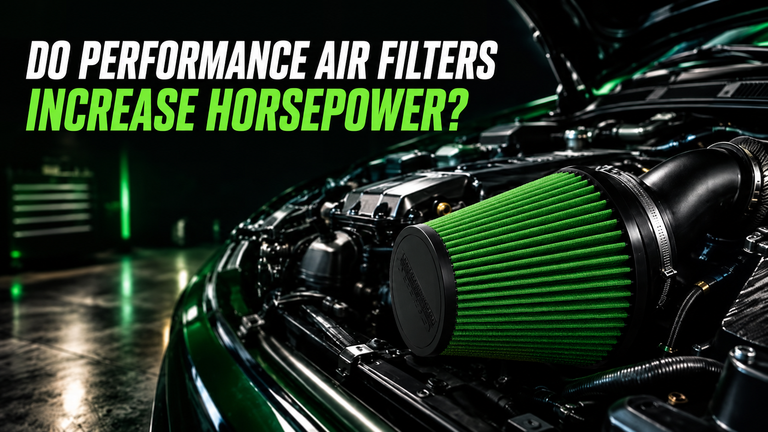
Green Filter USA offers washable, reusable cotton-gauze filters with vehicle-specific and universal fitment options. The relevant benefit here is a serviceable filter: cleaning, drying, and re-oiling replaces routine disposal when the filter remains in good condition.
Green Filter recommends inspection at every oil change and cleaning about every 30,000 miles under normal conditions, sooner in dusty environments. Its Cleaner & Care instructions specify gentle washing, natural drying, approved oil, and avoiding over-oiling.
Follow the reusable filter cleaning guide for the full process. Correct fitment and care matter independently of any fuel-economy expectation.
Maintain the Filter and Investigate the MPG Drop
Inspect and service your engine air filter for proper filtration, fit, and performance. If your modern vehicle is using more fuel, use measurements and diagnosis to find the cause.
Ready for a reusable replacement? Find a compatible Green Filter by year, make, model, and engine, and confirm fitment before ordering.







Comments
Loading comments...
Leave a Comment