

Quick Answer
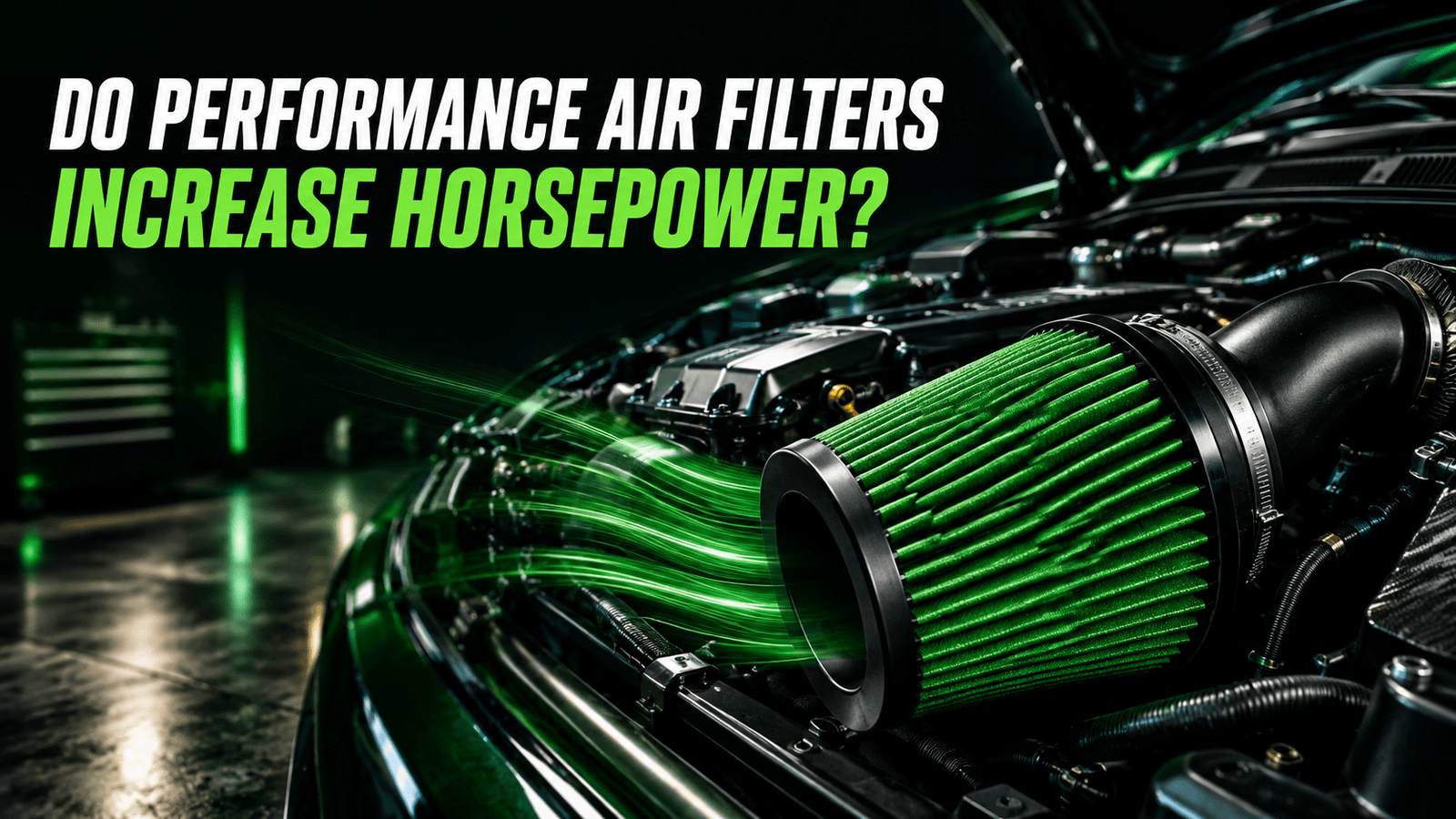
Yes, performance air filters may help support horsepower when they reduce a meaningful restriction in the engine's intake system. However, installing a high-flow air filter does not guarantee a specific horsepower gain on every vehicle.
The actual difference depends on the engine, factory airbox, intake design, existing airflow restriction, modifications, and how much air the engine requires.
In simple terms, a performance air filter does not create horsepower by itself. It can help an engine breathe more efficiently when the existing filter or intake is restricting the airflow the engine needs.
How Does a Performance Air Filter Affect Horsepower?
An engine needs a steady supply of clean air for combustion. Before that air reaches the engine, it travels through the air filter, airbox, intake tubing, throttle body, and other intake components.
Each part of that path can create some resistance to airflow.
A high-flow performance air filter is designed to reduce unnecessary airflow restriction while still filtering harmful dirt and debris from incoming air.
The basic relationship is:
Higher engine airflow demand → intake restriction → pressure loss → potential performance limitation
If the original filter is creating a meaningful restriction, reducing that restriction may help support engine performance.
However, more airflow does not automatically mean more horsepower. If the factory intake already supplies all the air the engine requires, changing only the filter may produce little or no measurable horsepower gain.
Want to learn more about filter construction and materials? Read our Types of Air Filters for Cars guide.
How Much Horsepower Can a Performance Air Filter Add?
There is no universal horsepower number that applies to every vehicle.
A performance air filter HP gain can vary depending on:
- Engine size and design
- Factory intake restriction
- Naturally aspirated or forced-induction setup
- Airbox and intake tubing
- Filter size and design
- Engine modifications
- ECU calibration
- Filter condition
- Testing conditions
For this reason, claims that every performance air filter adds a fixed amount of horsepower should be treated carefully.
Vehicle-specific, controlled testing is the most reliable way to determine whether a filter produces a measurable performance difference on a particular application.
Performance Air Filter vs. Stock Air Filter
Both stock and performance air filters have the same basic responsibility: supplying the engine with clean air while helping prevent dirt and debris from entering the intake system.
The main differences are typically found in their construction, airflow characteristics, service requirements, and intended use.
| Feature | Stock Paper Filter | Performance Air Filter |
|---|---|---|
| Primary purpose | OEM-style filtration | Filtration with performance-oriented airflow |
| Service | Usually replaced | Often washable and reusable |
| Airflow | Depends on OEM design | Designed to reduce unnecessary restriction |
| Maintenance | Replace when required | Clean or service according to manufacturer |
| Construction | Commonly paper media | Varies by performance-filter design |
Green Filter uses a washable, reusable performance-filter design rather than a traditional replace-and-discard maintenance cycle.
Learn more in our Washable Air Filter Guide.
When Is a High-Flow Air Filter Most Likely to Help?
A high-flow filter is more likely to affect performance when the existing filter or intake system is creating a meaningful restriction.
Stock Engines
On a completely stock vehicle, the performance difference may be modest if the factory intake already provides sufficient airflow for the engine.
That does not necessarily make a performance filter pointless. Reusability, serviceability, airflow characteristics, and long-term maintenance may also be important when choosing an engine air filter.
Modified Engines
Modified engines may require more airflow than they did in their original factory configuration.
As airflow demand increases, restrictions within the intake system can become more important. In these applications, evaluating the filter and the complete intake system may be especially useful.
Turbocharged and Supercharged Engines
Forced-induction engines can move substantial amounts of air under load, but having a turbocharger or supercharger does not automatically mean an air-filter change will add horsepower.
The result still depends on whether the existing filter or another part of the intake system is restricting the airflow the engine requires.
Can a Dirty Air Filter Reduce Performance?
Yes. A sufficiently clogged air filter can restrict airflow and negatively affect vehicle performance.
A technical study published by SAE International, involving researchers from Oak Ridge National Laboratory, evaluated clogged intake air filters on five gasoline vehicles. The researchers reported a measurable acceleration-performance penalty with clogged filters across the vehicles tested.
For modern computer-controlled gasoline vehicles, the study found little sensitivity in fuel economy to air-filter condition, even though acceleration performance could still be affected.
The U.S. Department of Energy gives similar guidance: replacing a clogged air filter on a modern fuel-injected, computer-controlled gasoline vehicle may improve acceleration, but it should not generally be expected to improve fuel economy.
That distinction is important:
Acceleration, fuel economy, airflow, and peak horsepower are related topics, but they are not the same measurement.
If you use a reusable filter, proper maintenance also matters. See our Guide to Cleaning a Reusable Air Filter.
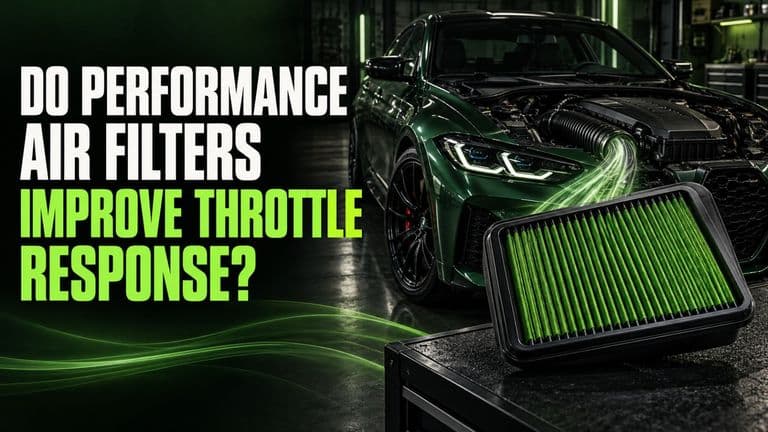
Does a Performance Air Filter Improve Throttle Response?
It may, depending on the vehicle and the amount of intake restriction present.
Reducing a meaningful restriction can affect how responsive an engine feels, particularly when the previous filter was heavily clogged or restrictive.
However, throttle response and horsepower are not the same thing.
Throttle response describes how quickly the vehicle reacts to accelerator input. Horsepower is a measured output under defined operating conditions.
A vehicle may therefore feel more responsive without showing a large change in peak horsepower on a dyno.
Does More Airflow Always Mean More Horsepower?
No.
An engine can only benefit from airflow it can actually use. Horsepower depends on the entire engine system, including airflow, fuel delivery, ignition, engine speed, exhaust flow, forced induction where applicable, and engine management.
Reducing unnecessary intake restriction can be useful, but simply increasing airflow capacity does not guarantee additional horsepower.
A performance air filter should therefore be evaluated as part of the complete intake and engine system, not as an isolated horsepower modification.
Is a Performance Air Filter Worth It?
A performance air filter can be a worthwhile upgrade, but it should not be purchased based on a guaranteed horsepower number.
Consider the complete package:
- Airflow
- Filtration
- Proper vehicle fitment
- Reusability
- Maintenance requirements
- Engine airflow demand
- Vehicle-specific performance testing
For some vehicles, reducing air-filter restriction may result in a measurable performance difference. For others, particularly stock vehicles with an already efficient intake, the difference may be relatively small.
Green Filter performance air filters are designed to provide high-flow, washable, reusable filtration for a variety of automotive applications.
Learn more about Green Filter's design and construction on our Why Choose Green Filter page.
The Bottom Line
Performance air filters may help support horsepower when they reduce a meaningful restriction in the engine's intake system, but they do not guarantee a fixed horsepower gain.
A stock vehicle with an efficient factory intake may show little difference, while an engine with greater airflow demand or a more restrictive original intake may respond differently.
Instead of focusing on a universal horsepower claim, consider the complete system: airflow, filtration, fitment, engine demand, maintenance, and vehicle-specific testing.
Ready to find the right performance air filter for your application? Use Green Filter's Shop by Vehicle tool to find a compatible filter for your year, make, model, and engine.







Comments
Loading comments...
Leave a Comment