

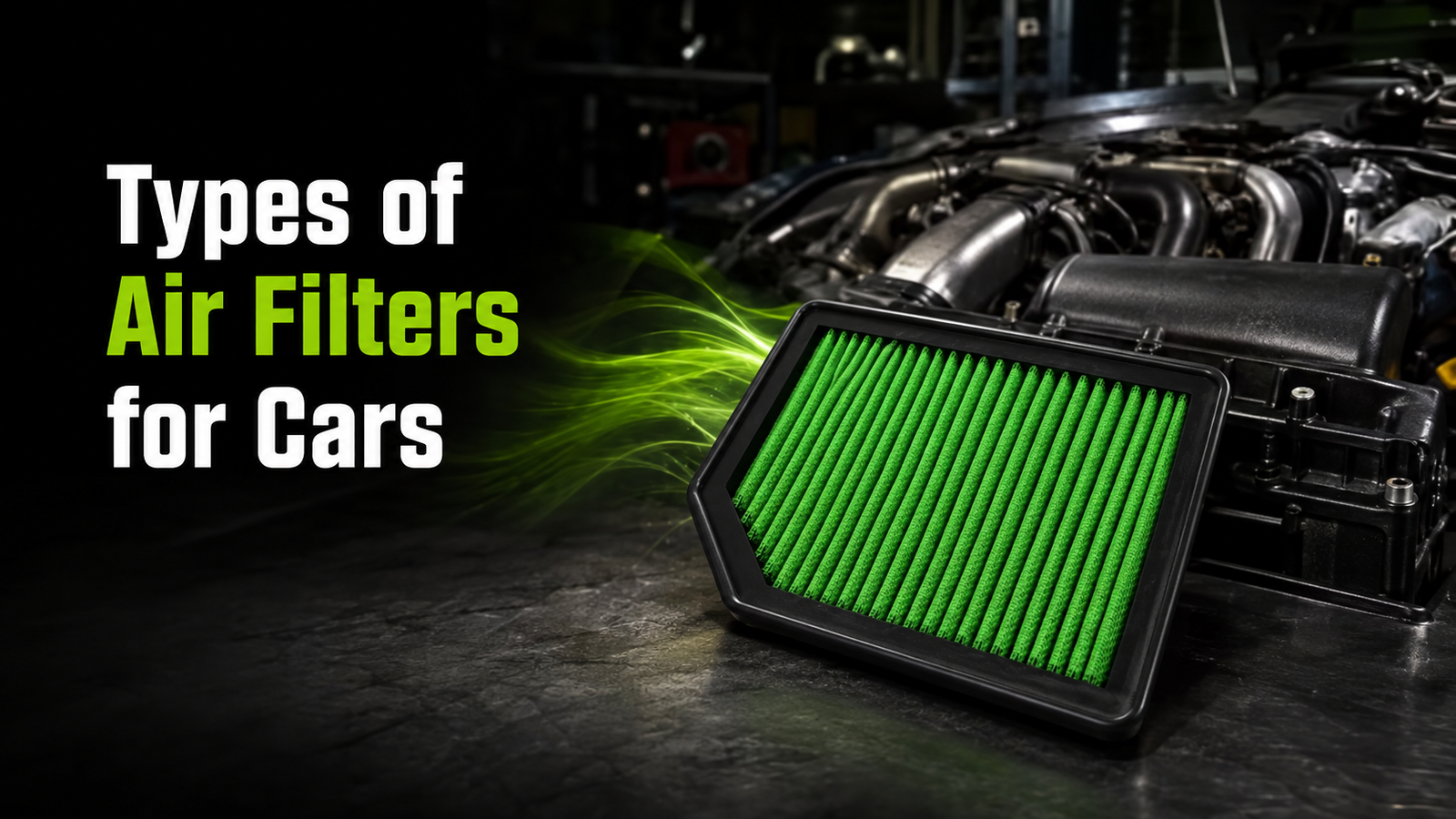
What Are the Types of Air Filters for Cars?
Paper filters are usually disposable and simple to replace. Foam filters are often serviceable and are used in some dusty, off-road, motorcycle, and specialty applications. Oiled cotton-gauze filters are washable and reusable performance filters. Some synthetic filters are also washable and reusable without requiring filter oil. There is no single type that is automatically best for every vehicle. Correct fitment, filtration needs, driving conditions, and maintenance preference matter more than the filter material alone.
What Does an Engine Air Filter Do?
An internal-combustion engine needs a steady supply of air. Before that air reaches the engine, the engine air filter helps capture contaminants such as dirt, dust, and road debris.
A properly selected filter should:
- Fit the intended airbox or intake system
- Seal correctly around its frame or flange
- Provide suitable filtration for the application
- Allow the airflow required by the engine
- Be maintained according to the manufacturer's instructions
That is why the correct filter in the correct size matters more than simply choosing a material labeled “performance.” For a stock vehicle, vehicle-specific fitment is normally the best place to start.
The Main Types of Engine Air Filters
Before comparing them, it helps to separate three terms that are often confused:
| Term | What It Describes |
|---|---|
| Filter media | Paper, foam, cotton gauze, or synthetic material |
| Filter shape | Panel, cone, round, or cylindrical |
| Service type | Disposable or reusable |
For example, a cone filter describes a shape, not necessarily the material it is made from. Likewise, “reusable” describes how a filter is serviced rather than a specific filter material. Now let's compare the most common engine air-filter media.
1. Paper or Cellulose Air Filters
Pleated paper-style filters are commonly used as standard replacement engine air filters in passenger vehicles. The filter material is folded into pleats, allowing a larger filtration surface to fit inside a relatively compact airbox.
Advantages of Paper Filters
Paper filters are popular because they are simple to maintain. Typical advantages include:
- Easy replacement
- No washing process
- No filter oil
- Wide availability for stock vehicles
- Minimal hands-on maintenance
When the filter reaches its service limit or becomes sufficiently dirty, it is generally removed and replaced.
Limitations of Paper Filters
Most conventional paper filters are disposable rather than serviceable. That means a driver who keeps a vehicle for many years may purchase and discard several filters during the life of the vehicle.
Service intervals can also vary depending on the vehicle, driving environment, mileage, and manufacturer recommendations. A truck regularly driven on dry dirt roads may require more frequent filter inspection than a commuter car used primarily on paved highways.
Paper Filters May Suit Drivers Who:
- Prefer replacing rather than cleaning a filter
- Want a simple maintenance routine
- Drive a mostly stock vehicle
- Do not want to wash or oil filter media
2. Foam Air Filters
Foam filters use porous foam as the filtration medium. Depending on the design, they may be washable and may require a specific filter oil after cleaning. Foam filters are frequently associated with certain motorcycles, powersports vehicles, off-road equipment, and specialty applications where serviceable filtration is useful.
Advantages of Foam Filters
Depending on the specific product, foam filters may provide:
- Washable construction
- Reusability
- Serviceability
- Suitability for certain dusty applications
- Flexibility for specialized filter designs
What Should You Consider?
Foam filters usually require more maintenance than disposable paper filters. A serviceable foam filter may need to be:
- Removed
- Cleaned with the approved cleaner
- Rinsed correctly
- Allowed to dry
- Oiled if required
- Reinstalled correctly
Maintenance methods differ between manufacturers.
Important
Do not assume that cleaner or oil made for one filter material is safe for another. Follow the instructions for the exact filter installed on your vehicle.
3. Oiled Cotton-Gauze Performance Filters
Oiled cotton-gauze filters are one of the most common types of washable reusable performance air filter. Instead of being discarded when dirty, they are designed to be cleaned, dried, re-oiled, and returned to service.
Green Filter uses this type of reusable filtration system in its automotive filters. According to the company's air filter FAQs, Green Filter states that its filtration system traps particles down to 5 microns. The company also states that its filters are made at its Mount Braddock, Pennsylvania facility using U.S.-manufactured materials.
How Does an Oiled Cotton-Gauze Filter Work?
The exact construction varies by manufacturer, but the maintenance cycle generally involves:
- Using the filter normally
- Inspecting it periodically
- Removing it when cleaning is needed
- Cleaning the filter media
- Allowing it to dry
- Applying the approved filter oil
- Reinstalling it correctly
Advantages of Cotton-Gauze Filters
For drivers who want a serviceable filter, potential benefits include:
- Washable filter media
- Repeated reuse
- Direct-fit options for factory airboxes
- Universal options for custom intake systems
- Less reliance on routine disposable-filter replacement
Reusable Does Not Mean Maintenance-Free
A reusable filter still needs proper care. Using an unsuitable cleaner, applying excessive oil, or reinstalling the filter incorrectly can interfere with the intended maintenance process.
For Green Filter products, follow the company's Cleaner & Care instructions or the detailed reusable air filter cleaning guide. Green Filter currently recommends inspection at oil-change intervals and cleaning around every 30,000 miles under normal conditions, with more frequent service in dusty environments.
4. Synthetic Engine Air Filters
Synthetic filters use engineered fiber media rather than traditional paper, foam, or cotton gauze. Their design varies significantly by manufacturer.
Some synthetic filters are disposable, while others are washable and reusable. Certain reusable synthetic filters are designed to operate dry and therefore do not require the re-oiling step used with an oiled cotton-gauze filter.
Potential Advantages
Depending on the product, synthetic filters may offer:
- Oil-free operation
- Washable options
- Reusable construction
- Stock-replacement or universal configurations
- Less maintenance than an oiled reusable filter
However, synthetic does not automatically mean washable, reusable, or better performing. Always confirm:
- Exact vehicle fitment
- Whether the filter is washable
- Whether filter oil is required
- Approved cleaning instructions
- Manufacturer service recommendations
Paper vs. Foam vs. Cotton Gauze vs. Synthetic
Here is the comparison in simple terms:
| Filter Type | Usually Reusable? | Oil Required? | Typical Maintenance | Common Use |
|---|---|---|---|---|
| Paper | No | No | Replace | Stock passenger vehicles |
| Foam | Often | Sometimes | Clean and service | Off-road, powersports, specialty use |
| Cotton gauze | Yes | Usually | Clean, dry, re-oil | Reusable performance applications |
| Synthetic | Depends | Often no | Replace or wash | Stock and performance applications |
There is no universal winner. For most drivers, the better question is: which filter fits my vehicle correctly and matches my driving environment and maintenance preferences?
Does a Performance Air Filter Increase Horsepower?
You should not assume that simply replacing an engine air filter will produce a specific horsepower increase. Engine airflow depends on the complete intake system, including:
- Filter size
- Filter design
- Airbox construction
- Intake tubing
- Existing airflow restriction
- Engine airflow demand
- Vehicle configuration and tuning
A less-restrictive filter may affect airflow, but the measurable performance difference varies between vehicles and applications. If horsepower is an important reason for choosing a filter, look for vehicle-specific testing rather than relying on a universal horsepower claim.
Can a New Engine Air Filter Improve Gas Mileage?
For modern vehicles, be cautious with guaranteed fuel-economy claims. A U.S. Department of Energy study examined the effect of clogged engine air filters on vehicle fuel economy. In the newer fuel-injected vehicles tested, clogging the filter did not produce a significant fuel-economy effect, although acceleration performance improved when a clean filter was installed. Older carbureted vehicles responded differently.
You can review the full U.S. Department of Energy air-filter study.
For a modern vehicle, choose an engine air filter primarily based on fitment, filtration, condition, maintenance requirements, and the needs of the intake system, rather than expecting a guaranteed MPG increase.
Engine Air Filter vs. Cabin Air Filter
These two filters are often confused, but they perform different jobs. An engine air filter filters incoming air before it enters the engine. A cabin air filter filters air entering the passenger compartment through the heating, ventilation, and air-conditioning system. They are not interchangeable.
If you are shopping for an engine-performance filter, make sure the product is intended for the engine intake, not the cabin HVAC system.
Does Air Filter Shape Matter?
Yes, but filter shape is different from filter media. Common engine air-filter shapes include:
Panel Filters
Panel filters are usually flat or rectangular and are commonly found inside factory-style airboxes. For universal applications, dimensions such as length, width, and height need to be checked carefully. See Green Filter's universal panel air filters for examples.
Cone and Cylinder Filters
Cone and cylindrical filters are often used in custom or performance intake systems. Important measurements can include:
- Flange or inlet diameter
- Overall height
- Base diameter
- Top diameter
See universal cone and cylinder air filters for size-based applications.
Round Filters
Round filters are commonly used with traditional air-cleaner assemblies, classic vehicles, and specialty applications. Important measurements may include outside diameter, inside diameter, and height. See universal round air filters for examples.
How Do I Find the Correct Air Filter for My Car?
For a stock vehicle, start with your exact: Year → Make → Model → Engine
This is more reliable than choosing a filter simply because it looks similar to the one already installed. Green Filter's vehicle finder lets you check compatible filters using those vehicle details.
For a custom intake or universal filter, measurements become more important. Depending on the filter shape, you may need:
- Length
- Width
- Height
- Inside diameter
- Outside diameter
- Flange diameter
If you are unsure how to take those measurements, use the air filter measurement guide.
Which Type of Air Filter Is Right for You?
The simplest way to decide is to match the filter type to how you maintain and use your vehicle.
- A paper filter may make sense if you want straightforward replacement with minimal maintenance.
- A foam filter may make sense when the vehicle or specialty application is designed for serviceable foam filtration.
- An oiled cotton-gauze filter may make sense if you want a washable reusable performance filter and are comfortable cleaning and re-oiling it correctly.
- A synthetic filter may make sense if a compatible option exists and its filtration and maintenance requirements suit your vehicle.
Regardless of material, correct fitment and proper maintenance should come first.







Comments
Loading comments...
Leave a Comment