

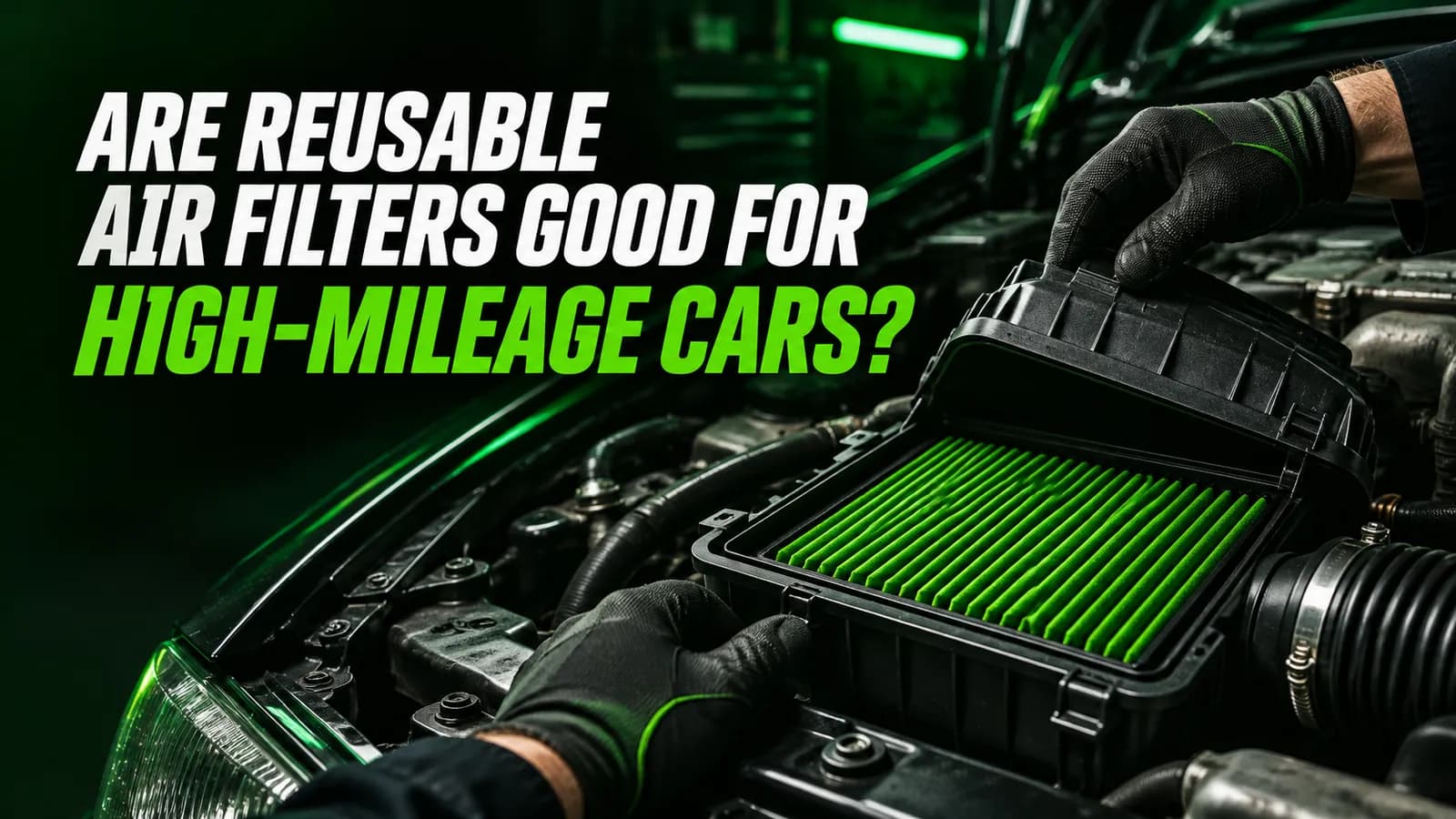
Yes, reusable air filters for high-mileage cars can be a practical choice when the filter fits correctly, the air intake system is in good condition, and maintenance is performed properly.
High mileage alone does not make a vehicle unsuitable for a reusable engine air filter. The condition of the airbox, intake hoses, filter seal, sensors, and engine matters more than the number displayed on the odometer.
However, a reusable air filter is a maintenance component—not a repair for an engine that already has mechanical or electronic problems.
What Is Considered a High-Mileage Car?
There is no official mileage at which every car becomes a high-mileage vehicle. However, the term is commonly used for cars that have traveled more than 100,000 miles.
Many properly maintained cars continue operating reliably beyond this point. Older vehicles may still develop age-related problems, including:
- Cracked intake hoses
- Damaged airbox clips
- Worn filter seals
- Loose intake connections
- Dirt inside the airbox
- Unresolved engine warning lights
These parts should be inspected before installing a new engine air filter.
Are Reusable Air Filters for High-Mileage Cars Safe?
Reusable air filters are generally safe for high-mileage vehicles when the correct filter is selected and installed properly.
Before purchasing, use Green Filter’s Shop by Vehicle tool to search by year, make, model, and engine. This helps confirm that the filter is designed for the specific application.
A suitable reusable filter should:
- Fit evenly inside the factory airbox
- Create a complete seal around its frame
- Allow the airbox to close securely
- Match the correct engine and vehicle application
- Be maintained according to the manufacturer’s instructions
A high-quality filter cannot provide reliable filtration if air can pass around its frame because of incorrect fitment or a damaged airbox.
Benefits of Reusable Air Filters for High-Mileage Cars
Long-Term Reusability
A reusable engine air filter can be cleaned, serviced, and reinstalled instead of being discarded after one service cycle.
This may benefit drivers who plan to keep their older vehicles for several more years. It can reduce the need to purchase multiple disposable filters over the remaining life of the car.
Green High Performance Air Filters are designed for long-term use and are covered by a Limited Lifetime Warranty, subject to the company’s registration, maintenance, and usage requirements. Read the complete Green Filter guarantee and warranty information before installation.
Regular Intake-System Inspection
Maintaining a reusable filter encourages owners to inspect the airbox and intake system regularly. This is particularly useful for older vehicles because rubber, plastic, clips, and seals may weaken with age.
Routine inspection may reveal:
- Loose airbox fasteners
- Cracked intake tubing
- Leaves or debris inside the housing
- A damaged filter frame
- Improper sealing
- Excessive dirt buildup
Finding these issues early may help prevent unfiltered air from bypassing the filter.
Vehicle-Specific Fitment
Green Filter offers vehicle-specific applications for different cars, trucks, motorcycles, and performance vehicles.
If you are unsure how fitment works, read the engine air filter replacement guide before choosing a replacement.
Always confirm the exact engine option. Two vehicles from the same model year may use different filters if they have different engine sizes or intake systems.
What a Reusable Air Filter Cannot Fix
Reusable air filters for high-mileage cars are designed to filter incoming air. They cannot repair unrelated engine problems.
Replacing the filter will not correct:
- Worn piston rings
- Excessive oil consumption
- Vacuum leaks
- Faulty airflow or oxygen sensors
- Ignition problems
- Fuel-delivery faults
- Transmission problems
- Existing diagnostic trouble codes
A sudden reduction in fuel economy may also have several possible causes. The U.S. Environmental Protection Agency lists the air cleaner element as one of several items a mechanic may check when diagnosing poor fuel economy.
If the vehicle has rough idling, smoke, unusual noises, reduced power, or an illuminated check engine light, have the problem diagnosed instead of assuming the air filter is the only cause.
What Should You Check Before Installation?
Inspect the Existing Airbox
Remove the old filter and inspect the housing. Look for cracks, warped edges, damaged clips, missing fasteners, and heavy debris.
Clean loose debris from the housing without allowing it to enter the intake tube.
Examine the Intake Hose
Older plastic and rubber components may become brittle. Check for cracks, loose clamps, or disconnected lines between the airbox and the engine.
An air leak after the filter can allow unmetered or unfiltered air into the intake system.
Check the Filter Seal
The filter frame should sit flat and evenly inside the housing. Do not force the airbox closed if the filter does not fit properly.
Review Existing Warning Lights
If the check engine light is already illuminated, record and diagnose the fault before changing the filter. This creates a clear baseline and helps prevent an existing problem from being incorrectly blamed on the new filter.
Confirm the Maintenance History
If the car’s maintenance history is unknown, inspect the complete intake system. Heavy contamination may indicate that previous filter service was neglected.
How to Maintain a Reusable Air Filter
Correct maintenance is essential when using reusable air filters for high-mileage cars.
Green Filter recommends visually inspecting its filters at every oil change. Under normal driving conditions, cleaning is generally recommended at approximately 30,000 miles. Dusty, off-road, agricultural, or construction environments may require earlier inspection and service.
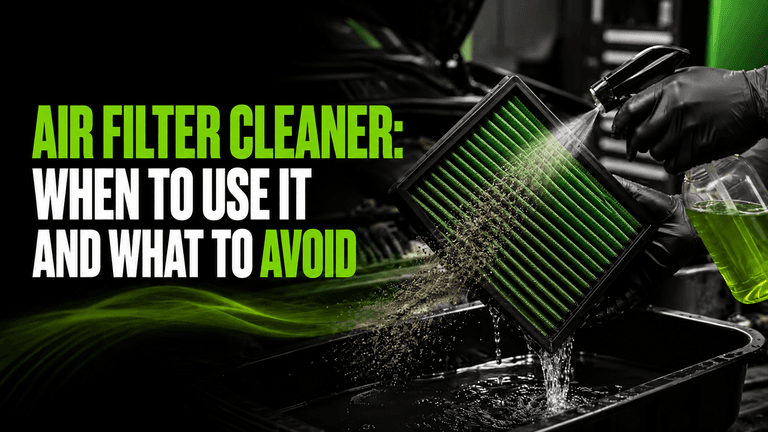
The basic Green Filter cleaning process includes:
- Remove loose dirt and debris carefully.
- Apply Green Filter Cleaner.
- Allow the cleaner to soak for approximately 15 minutes.
- Rinse gently from the clean side toward the dirty side.
- Allow the filter to air-dry naturally and completely.
- Apply Green Filter Oil evenly.
- Reinstall the filter and confirm a complete seal.
Read the full reusable air filter cleaning guide before starting. The approved cleaner and recharge oil are available on the Cleaner & Care page.
Avoid using:
- High-pressure water
- Compressed air
- Strong household detergents
- Hair dryers or heat guns
- Motor oil
- Transmission fluid
- WD-40
- Unapproved filter oil
Do not reinstall the filter while it is wet, and do not apply excessive oil.
When Should a Reusable Filter Be Replaced?
Reusable does not mean indestructible. Cleaning cannot repair physical damage.
Replace the filter if you find:
- Tears or holes in the media
- A cracked or warped frame
- A damaged sealing edge
- Separated filter material
- Contamination that cannot be removed safely
- A filter that no longer sits correctly inside the airbox
A damaged filter may allow unfiltered air to bypass the media. When in doubt, contact the filter manufacturer or a qualified automotive technician.
Will an Aftermarket Reusable Filter Void the Warranty?
Using an aftermarket part does not automatically cancel a vehicle warranty.
According to the Federal Trade Commission’s auto warranty guidance, warranty coverage generally cannot be denied simply because an aftermarket part was used. However, coverage for a specific repair may be denied if the aftermarket part was defective, installed incorrectly, or caused the damage.
Keep the filter receipt and maintenance records. Also review the warranty terms supplied by the vehicle and filter manufacturers.
Frequently Asked Questions
Are reusable air filters suitable for cars with over 100,000 miles?
Yes. Reusable air filters for high-mileage cars can be suitable when the intake system is in good condition and the correct vehicle-specific filter is installed.
Will a reusable filter restore lost engine power?
Not necessarily. Replacing a severely restricted filter may help restore normal airflow, but a filter cannot repair engine wear, vacuum leaks, sensor faults, or other mechanical problems.
How often should a reusable Green Filter be cleaned?
Green Filter recommends inspection at every oil change and cleaning at approximately 30,000 miles under normal conditions. Dusty or dirty driving conditions may require earlier service.
Can I install a reusable air filter myself?
Many vehicle-specific filters are designed as drop-in replacements for the factory airbox. Follow the product instructions and confirm that the filter sits evenly and the airbox closes securely.
Is a reusable air filter worth buying for an older car?
It may be worthwhile when the vehicle is in serviceable condition and the owner plans to keep it long enough to benefit from repeated cleaning and reuse.
Final Answer
Reusable air filters for high-mileage cars can provide a practical, long-term alternative to disposable filters. Vehicle mileage is not the main deciding factor. Correct fitment, a sealed airbox, a healthy intake system, and proper maintenance are more important.
Inspect the intake system before installation and resolve any existing engine problems separately. After installation, follow the approved cleaning procedure and replace the filter if its frame, seal, or media becomes damaged.
Ready to check compatibility? Find a reusable air filter for your vehicle by selecting the correct year, make, model, and engine.

Comments
Be the first to leave a comment.
Leave a Comment