


Quick Answer
Yes, a performance air filter may help an engine respond more freely when you press the accelerator, but the improvement varies by vehicle.
A severely restricted engine air filter can reduce the amount of air available during harder acceleration. Testing discussed by MOTOR Magazine showed that significant intake restriction reduced measured airflow and affected engine performance under load.
That does not mean every vehicle will suddenly feel faster after installing a high-flow filter. A clean factory filter in a well-designed intake system may already provide enough airflow for normal driving.
What Is Throttle Response?
Throttle response is how quickly the engine reacts when you press the accelerator.
Good throttle response can make a vehicle feel more immediate when:
- Pulling away from a stop
- Accelerating onto a highway
- Passing another vehicle
- Driving through changing speeds
- Applying throttle during performance driving
Many systems affect that response, including the throttle body, engine management, transmission, intake design, and airflow.
The air filter is only one part of that system.
How Can an Air Filter Affect Throttle Response?
Your engine needs a steady supply of clean air.
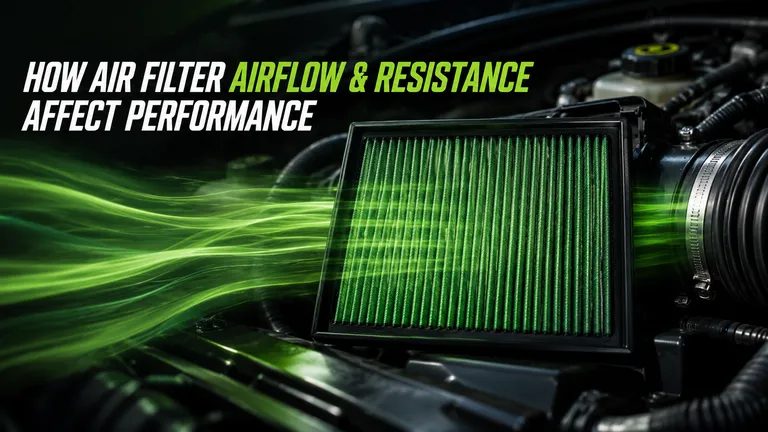
If airflow through the filter becomes heavily restricted, the engine may have more difficulty getting the air it needs during higher-demand conditions. Research on engine air filtration has also found that a clogged filter can reduce the intake air mass reaching the engine.
A properly designed high-flow filter aims to reduce unnecessary restriction while still filtering contaminants.
Green Filter uses a washable, reusable high-flow filter design intended to support airflow while trapping dirt and contaminants before they reach the engine.
When might the difference be more noticeable?
You may be more likely to notice a change when:
- Your existing filter is dirty or restrictive
- Your engine has higher airflow demands
- The vehicle has other intake or performance modifications
- You regularly accelerate at higher engine speeds
- The replacement filter fits and seals correctly
If your current filter is already clean and the factory intake is not restricting airflow, the change in throttle feel may be small.
Does High-Flow Mean More Horsepower?
Not automatically.
Throttle response and horsepower are not the same thing.
A vehicle may feel more responsive without producing a meaningful increase in peak horsepower. Likewise, installing a performance filter alone does not guarantee a specific horsepower gain.
That is why an air filter should be evaluated on its airflow, filtration, fitment, maintenance requirements, and compatibility with the vehicle, rather than relying on exaggerated performance promises.
Why Correct Fitment Matters
A high-flow filter is only useful if it fits the vehicle correctly.
The filter should seat properly inside the airbox and create the intended seal. Green Filter recommends matching the filter using the vehicle's year, make, model, and engine rather than choosing a generic filter.
Many Green Filter applications are designed as vehicle-specific replacements, allowing drivers to upgrade the filter without necessarily replacing the complete factory intake system.
Keep a Reusable Filter Properly Maintained
Even a high-flow filter needs maintenance.
Green Filter recommends inspecting its reusable filters during routine maintenance and cleaning them approximately every 30,000 miles under normal conditions, with more frequent attention in dusty or dirty environments.
Proper cleaning and re-oiling help keep the reusable filter functioning as designed.
Final Answer
A performance air filter can improve throttle response when it reduces a meaningful restriction in the engine's intake airflow, but the improvement is vehicle-dependent and should not be treated as a guaranteed performance gain.
For drivers looking for a washable, reusable high-flow option, the first step is finding a filter designed specifically for their vehicle and engine.








Comments
Loading comments...
Leave a Comment