

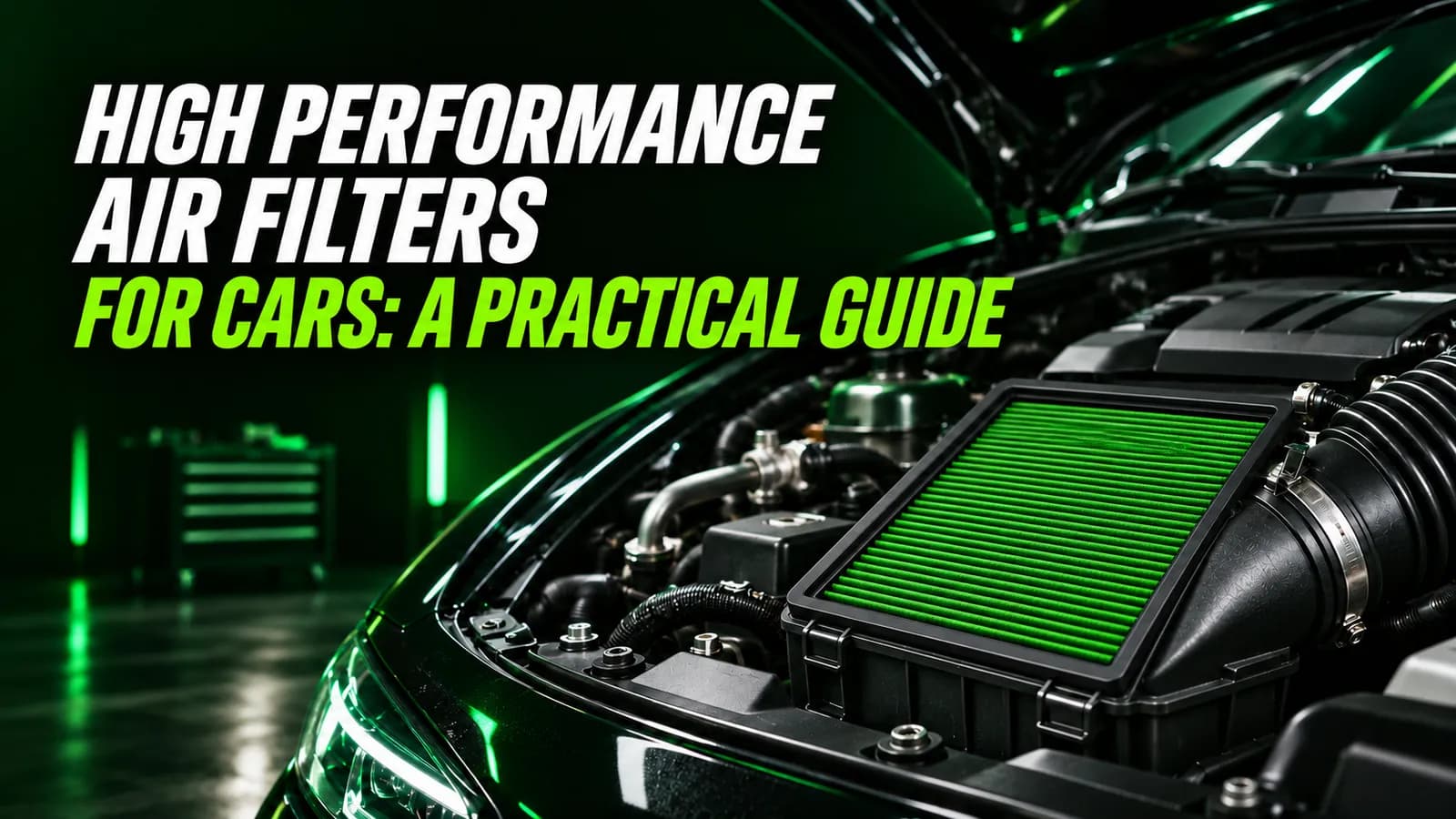
High performance air filters for cars are designed to support engine airflow while helping prevent dirt and road debris from entering the intake system. Many performance filters are also washable and reusable, making them a long-term alternative to disposable paper filters.
However, a performance air filter should be chosen according to its fitment, filtration, airflow, maintenance requirements, and compatibility with the vehicle. It should not be selected only because of a promised horsepower number.
This guide explains how performance filters work, what benefits drivers can realistically expect, and what to check before buying one for a car.
What Is a High Performance Car Air Filter?
An engine air filter sits inside the vehicle’s intake system. Its main job is to filter the air that travels toward the engine.
A standard paper filter and a performance filter perform the same basic task, but their construction and maintenance requirements can differ.
High performance air filters for cars are commonly designed with:
- Performance-oriented filter media
- A larger usable filtration surface
- Deeper or more closely designed pleats
- A strong frame and sealing edge
- Washable and reusable construction
- Vehicle-specific or universal fitment options
Green Filter uses a reusable woven-cotton design engineered to balance airflow, filtration, fitment, and long-term service. Learn more about the filter design on the Why Choose Green Filter page.
How Do Performance Air Filters Work?
An engine needs a steady supply of filtered air. As air moves through the filter, the media traps dirt and contaminants before they can reach the engine.
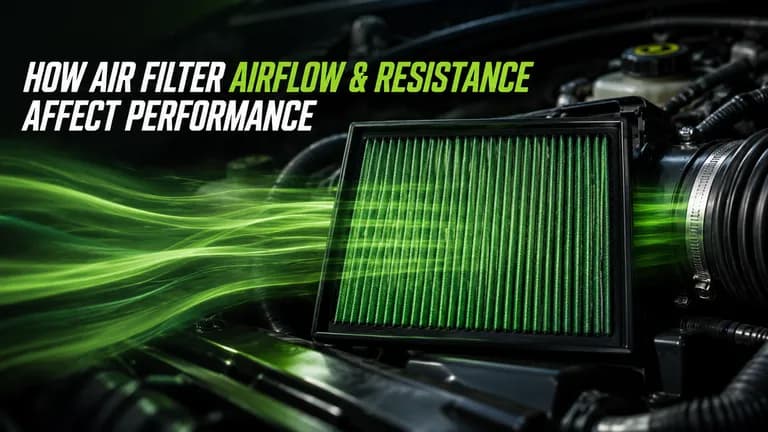
Every filter also creates some resistance to airflow. If a filter becomes heavily loaded with dirt, that restriction can increase.
A performance filter is designed to reduce unnecessary restriction while continuing to filter incoming air. However, the complete intake system also affects airflow, including:
- The factory airbox
- Intake tubing
- Bends and connections
- Filter size and condition
- Engine airflow demand
- Throttle body
- Vehicle modifications
Read the detailed guide to air filter airflow and resistance to understand why airflow, filtration, fitment, and sealing must work together.
What Are the Benefits of High Performance Air Filters for Cars?
Performance-Oriented Airflow
A high-flow filter is designed to support the amount of air required by the engine while avoiding unnecessary restriction.
This may become more relevant during heavy acceleration, higher engine speeds, performance driving, or when an engine has modifications that increase its airflow demand.
Potential Throttle Response Support
A less restrictive intake path may help an engine respond more freely when the accelerator is pressed. The actual difference depends on the vehicle, filter being replaced, factory intake design, and condition of the existing filter.
A vehicle with an already efficient intake system may show a smaller difference than a vehicle with a restrictive or heavily loaded filter.
Washable and Reusable Construction
Many high performance air filters for cars can be cleaned, serviced, and reinstalled.
Instead of discarding the filter whenever it becomes dirty, the owner can follow the approved cleaning process and return it to service. This can reduce repeated disposable-filter purchases during long-term vehicle ownership.
Long-Term Value
A reusable filter generally costs more initially than a basic disposable filter. Its value comes from repeated cleaning and reuse.
Long-term value depends on:
- How long the vehicle is kept
- How often a disposable filter would otherwise be replaced
- Correct filter maintenance
- Driving conditions
- The cost of the required cleaning products
Vehicle-Specific Fitment
Many performance panel filters are designed as direct replacements for the filter inside the factory airbox. A correctly matched drop-in filter may require no permanent intake modification.
Use Green Filter’s Shop by Vehicle tool and select the correct year, make, model, and engine before ordering.
Do Performance Air Filters Increase Horsepower?
A performance filter may support horsepower when the existing filter or intake system creates a meaningful restriction. However, installing a filter does not guarantee the same horsepower increase on every car.
Results can vary because of:
- Engine size and design
- Factory intake efficiency
- Existing filter restriction
- Intake tubing and airbox design
- Naturally aspirated or forced-induction setup
- Engine modifications
- ECU calibration
- Filter condition
- Testing method
A stock car with an efficient factory intake may experience a modest difference. An engine with higher airflow demand may respond differently.
Read Do Performance Air Filters Increase Horsepower? for a more detailed explanation of real-world performance variables.
Will a Performance Filter Improve Fuel Economy?
Drivers should be cautious with guaranteed fuel-economy claims.
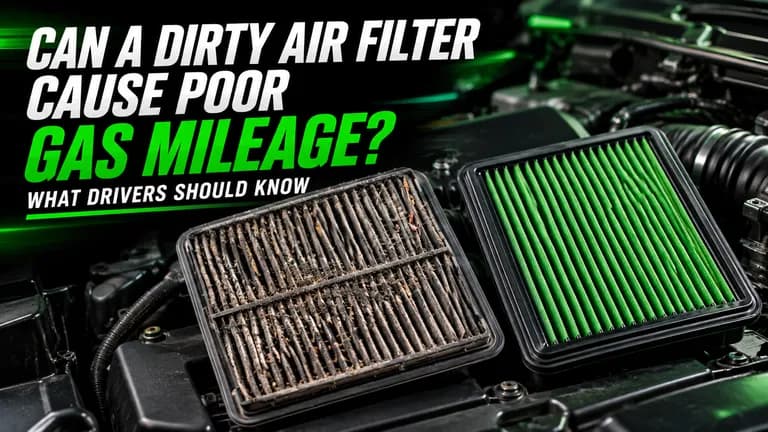
A U.S. Department of Energy study found that clogged intake air filters did not produce a measurable fuel-economy change in the modern gasoline and diesel vehicles tested. However, filter restriction reduced full-power acceleration. Older carbureted vehicles responded differently.
Fuel economy is also influenced by:
- Driving speed and acceleration
- Tire pressure
- Vehicle weight
- Engine condition
- Fuel quality
- Traffic and road conditions
- Weather
- Maintenance history
Choose a performance filter primarily for fitment, filtration, airflow characteristics, reusability, and maintenance rather than expecting a guaranteed MPG increase.
Which Cars Can Use a High Performance Air Filter?
High performance air filters for cars are available for many daily drivers, performance cars, classic vehicles, and modified applications.
Daily Drivers
A reusable drop-in filter can suit a daily driver when the owner wants to retain the factory airbox and follow a reusable maintenance schedule.
Performance Cars
Performance vehicles may have greater airflow demands during acceleration and higher engine speeds. Filter selection should still be based on tested fitment and compatibility with the complete intake system.
Turbocharged and Supercharged Cars
Forced-induction engines can move substantial amounts of air under load. A high-flow filter may support the intake system, but a turbocharger or supercharger does not guarantee a specific power increase from a filter alone.
Modified Cars
An engine with intake, exhaust, tuning, or internal modifications may require more airflow than it did in factory form. The filter should be evaluated as part of the complete engine setup.
Classic Cars
Older and carbureted vehicles can use performance filters when the dimensions, air-cleaner assembly, sealing surface, and engine requirements are correctly matched.
Drop-In vs Universal Performance Filters
Drop-In Panel Filters
A drop-in filter is designed to fit inside a compatible factory airbox. It is usually the simpler choice for drivers who want to keep the original intake housing.
Benefits may include:
- Easier installation
- Factory-style fitment
- No permanent modification
- Reusable maintenance
- Compatibility with the existing airbox
Universal Filters
Universal filters are available in different shapes, inlet sizes, lengths, and diameters. They are commonly used with custom intake systems and performance builds.
A universal filter must be selected using accurate measurements. Shape alone does not confirm correct fitment.
The filter must:
- Fit the intake connection securely
- Provide enough filtration surface
- Have adequate clearance
- Remain protected from engine heat and water
- Be installed without unfiltered air leaks
How to Choose the Right Performance Air Filter
Confirm Vehicle Compatibility
Check the exact year, make, model, and engine. Different engine options within the same model can use different filters.
Check the Filter Seal
The filter must sit evenly inside its housing and create a complete seal. Air should travel through the filter media rather than around its frame.
Evaluate Airflow and Filtration Together
A performance filter must support airflow while continuing to protect the engine from dirt and debris. Do not choose a filter based only on a large airflow number.
Review Maintenance Requirements
Confirm whether the filter needs cleaning, drying, and re-oiling. Make sure you are comfortable performing the required maintenance correctly.
Look for Clear Warranty Information
Review what the filter warranty covers, how registration works, and which maintenance practices are required. Green Filter provides its terms on the Guarantee and Warranty page.
Avoid Unsupported Claims
Be cautious when a product guarantees the same horsepower or fuel-economy improvement for every vehicle. Reliable results depend on the complete vehicle and intake configuration.
How to Maintain a Reusable Performance Filter
Green Filter recommends inspecting its filters during routine vehicle maintenance, including around oil-change intervals. Under normal conditions, cleaning is generally recommended at approximately 30,000 miles. Dusty, off-road, agricultural, or construction conditions may require earlier service.
The basic maintenance process includes:
- Remove loose dirt carefully.
- Apply the approved Green Filter cleaner.
- Allow the cleaner to soak as instructed.
- Rinse gently from the clean side toward the dirty side.
- Let the filter air-dry naturally and completely.
- Apply the recommended amount of Green Filter oil.
- Reinstall the filter and check the complete seal.
Use the full reusable air filter cleaning guide and approved Cleaner & Care products before servicing the filter.
Avoid compressed air, strong household detergents, high-pressure water, direct heat, unapproved oil, and reinstalling a wet filter.
Will a Performance Air Filter Void a Car Warranty?
Using an aftermarket part does not automatically cancel the complete vehicle warranty.
According to the Federal Trade Commission’s auto warranty guidance, a warranty generally remains in effect when aftermarket parts are used. However, coverage for related damage may be denied if an aftermarket part is defective, installed incorrectly, or causes the damage.
Keep your purchase receipt, installation information, and maintenance records.
Frequently Asked Questions
Are high performance air filters good for daily driving?
Yes, a correctly fitted performance filter can be used in a daily driver. The owner must follow its inspection and maintenance requirements.
Can a performance filter fit a stock airbox?
Many vehicle-specific panel filters are designed as direct replacements for compatible factory airboxes. Always verify the exact vehicle and engine before purchasing.
How much horsepower does a performance air filter add?
There is no universal horsepower figure. The result depends on the engine, intake system, existing restriction, vehicle modifications, and testing conditions.
Are high performance air filters reusable?
Many performance filters are washable and reusable, but the owner must follow the manufacturer’s cleaning and servicing instructions.
How often should a Green Filter be cleaned?
Green Filter generally recommends cleaning at approximately 30,000 miles under normal driving conditions and inspecting the filter around oil-change intervals. Dirty environments may require earlier service.
Is a performance air filter worth buying?
It may be worthwhile for drivers who value reusable construction, long-term service, performance-oriented airflow, and correct vehicle-specific fitment.
Final Answer
High performance air filters for cars can provide reusable construction, performance-oriented airflow, and long-term service when correctly selected and maintained.
Choose a filter that fits the exact vehicle and engine, seals securely, provides effective filtration, and has clear maintenance instructions. Treat horsepower and fuel-economy claims carefully because results vary between vehicles.
Ready to check compatibility? Use the Green Filter vehicle finder to search by year, make, model, and engine.
Comments
Be the first to leave a comment.
Leave a Comment