

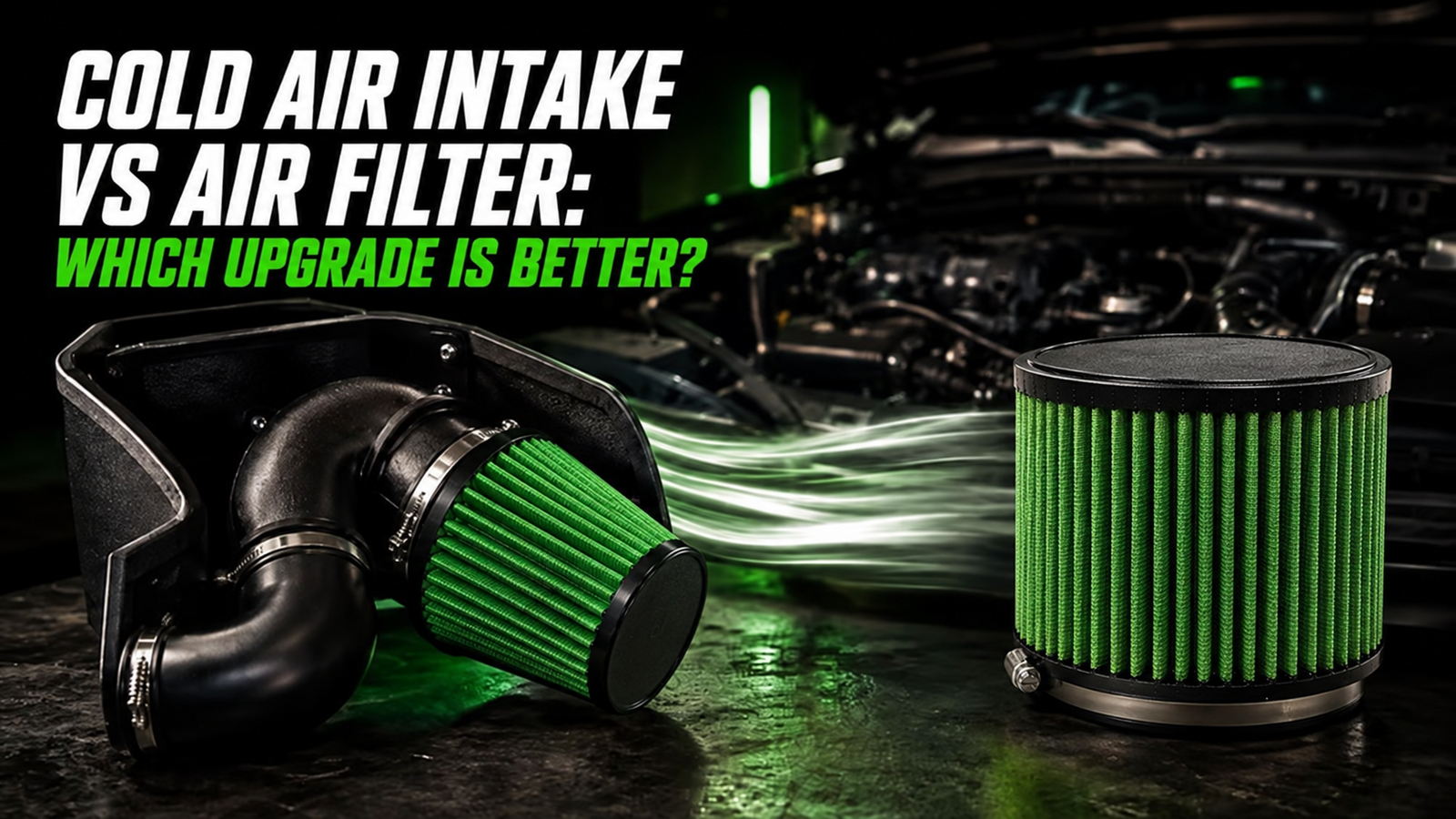
Quick answer: A performance air filter is usually the simpler choice if you want to keep the factory airbox and make fewer modifications. A cold air intake is a larger upgrade that can change intake sound and airflow characteristics more noticeably. Neither option guarantees a specific horsepower gain because results depend on the vehicle and complete intake design.
Transparency: Green Filter manufactures and sells reusable performance air filters. This guide compares both options so drivers can choose based on their vehicle, budget, and goals.
Cold Air Intake vs Air Filter: Quick Comparison
| Feature | Performance Air Filter | Cold Air Intake |
|---|---|---|
| Main change | Filter element | More of the intake system |
| Factory airbox | Usually retained | Often replaced or modified |
| Installation | Usually simpler | More involved |
| Cost | Generally lower | Generally higher |
| Intake sound | Usually subtle | Often more noticeable |
| Maintenance | Filter-specific | Filter still requires maintenance |
| Best for | Simple intake upgrade | Larger intake modification |
What Is a Performance Air Filter?
A performance air filter replaces the engine air filter without necessarily changing the factory airbox or intake tubing.
Direct-fit filters are designed for specific vehicle applications, making them a practical option for drivers who want to upgrade their filtration setup while retaining most of the original intake system.
Green Filter manufactures washable and reusable engine air filters for vehicle-specific and universal applications. You can shop engine air filters by vehicle and confirm the correct year, make, model, and engine before purchasing.
Why Choose a Performance Air Filter?
A direct-fit reusable filter can offer:
- Simple installation
- Factory airbox retention
- Washable and reusable construction
- Fewer intake-system changes
- Easier return to the factory setup
However, changing the filter alone does not redesign the complete intake system.
The original intake tubing, airbox geometry, inlet location, sensors, and engine calibration generally remain unchanged.
What Is a Cold Air Intake?
A cold air intake is a more extensive intake-system modification.
Depending on the design, it may include:
- A replacement air filter
- New intake tubing
- A different enclosure or airbox
- Mounting hardware
- A relocated air inlet
A cold air intake still requires an air filter. The real comparison is therefore:
Do you want to upgrade only the filter, or modify more of the intake system?
Documentation from the California Air Resources Board shows that approved aftermarket intake systems may include filters, intake tubing, housings, and related hardware for specific vehicle applications.
Green Filter also offers filters for certain aftermarket intake systems. For example, Green Filter Part #7051 is listed for specified Ford Racing cold air intake applications.
Cold Air Intake vs Air Filter: Which Makes More Power?
There is no universal horsepower number that applies to every performance filter or cold air intake.
A cold air intake changes more of the intake system, so it can alter airflow characteristics more significantly than replacing only the filter. That does not mean every vehicle will produce a measurable horsepower increase.
Results depend on factors such as:
- Vehicle and engine design
- Factory intake restriction
- Intake tubing and geometry
- Inlet location
- Intake air temperature
- ECU calibration
- Existing modifications
- Filter condition
One useful engineering consideration is pressure drop, which helps describe restriction through an intake component or system.
Without controlled testing on a specific vehicle, horsepower or throttle-response gains should not be treated as guaranteed.
Best rule: Treat performance claims as vehicle-specific unless they are supported by controlled testing on that application.
Does a Dirty Air Filter Affect Performance?
A heavily clogged or restricted filter can affect how easily air reaches the engine.
U.S. Department of Energy guidance reports that replacing a severely clogged air filter can improve acceleration on some modern vehicles, but it does not necessarily improve fuel economy on modern fuel-injected gasoline or diesel vehicles.
That distinction matters.
A clean engine air filter is important for proper operation, but drivers should not expect a guaranteed MPG increase simply from installing a new or higher-flow filter.
Which Upgrade Changes Intake Sound More?
A complete intake system can often make induction sound more noticeable because it changes or removes factory components that help control intake noise.
A performance filter installed inside the original airbox usually makes a smaller change to the overall intake system.
The exact sound difference varies by vehicle and intake design.
If your main goal is stronger induction sound, a complete intake modification may be more relevant. If you prefer to retain the factory airbox, a direct-fit performance filter is the less extensive option.
Which Costs Less?
A performance air filter is generally the lower-cost starting point because you are replacing one component rather than an entire intake assembly.
A cold air intake normally includes additional tubing, hardware, an enclosure, and a filter, which increases the initial cost.
Reusable filters may also provide long-term value for some owners, but total ownership cost depends on:
- Initial purchase price
- Cleaning products
- Maintenance frequency
- How long you keep the vehicle
Instead of assuming one option is always cheaper, compare the total cost for your specific vehicle and ownership plans.
Which Is Easier to Install?
A direct-fit performance air filter is usually simpler to install.
For many vehicles, installation involves:
- Opening the factory airbox
- Removing the existing filter
- Inspecting the airbox for debris
- Installing the correct replacement filter
- Securing the airbox properly
A cold air intake may require removing factory tubing, brackets, sensors, or airbox components.
Installation difficulty varies by vehicle, so always follow the instructions supplied with the specific intake system.
What About Filter Maintenance?
Reusable performance filters require proper maintenance.
Green Filter recommends inspecting its filters at every oil change and generally cleaning them around 30,000 miles under normal driving conditions, with more frequent service in dusty or demanding environments.
The process includes:
- Cleaning the filter correctly
- Allowing it to air-dry fully
- Applying the recommended amount of filter oil
- Reinstalling the filter with a proper seal
Follow the official Green Filter Cleaner & Care instructions rather than using unapproved cleaning methods.
Proper fitment and sealing also matter. A correctly fitted filter should sit securely so incoming air passes through the filter media.
Is a Cold Air Intake Legal?
Legality depends on the vehicle, product, and location.
In California, certain aftermarket intake systems require an applicable CARB Executive Order exemption for the specific vehicle application.
Approval for one intake system or vehicle does not automatically apply to another.
If emissions compliance matters for your vehicle, verify the exact intake and application through the California Air Resources Board aftermarket parts program before installation.
Which Is Better for a Daily Driver?
For a mostly stock daily-driven vehicle, a performance air filter may suit drivers who want:
- A straightforward upgrade
- Factory airbox retention
- Washable and reusable filtration
- Less installation work
- Fewer changes to the original intake system
A cold air intake may suit drivers who want:
- A larger intake modification
- More noticeable induction sound
- Changes to the factory intake path
- An intake system that complements other modifications
There is no universal winner.
The better choice depends on your specific vehicle, budget, goals, local regulations, and available vehicle-specific test data.
Can You Use a Performance Filter With a Cold Air Intake?
Yes, as long as the filter is designed for that specific intake system.
Important fitment factors include:
- Correct inlet diameter
- Proper filter dimensions
- Secure mounting
- Reliable sealing
- Adequate clearance
- Compatibility with the intake design
Do not choose an intake filter based only on appearance.
If you need a vehicle-specific filter, use Green Filter's Shop by Vehicle tool to verify fitment before ordering.
Final Verdict
A performance air filter is the simpler choice for drivers who want to retain the factory airbox, reduce installation complexity, and use a washable, reusable filter.
A cold air intake is a larger modification that changes more of the intake system and may produce a more noticeable change in induction sound and airflow characteristics.
Neither option should be purchased based on generic horsepower or fuel-economy promises.
Choose based on your specific vehicle, verified fitment, budget, performance goals, emissions requirements, and credible testing.
If a washable, reusable performance filter fits your needs, find the correct Green Filter for your vehicle before ordering.







Comments
Loading comments...
Leave a Comment