

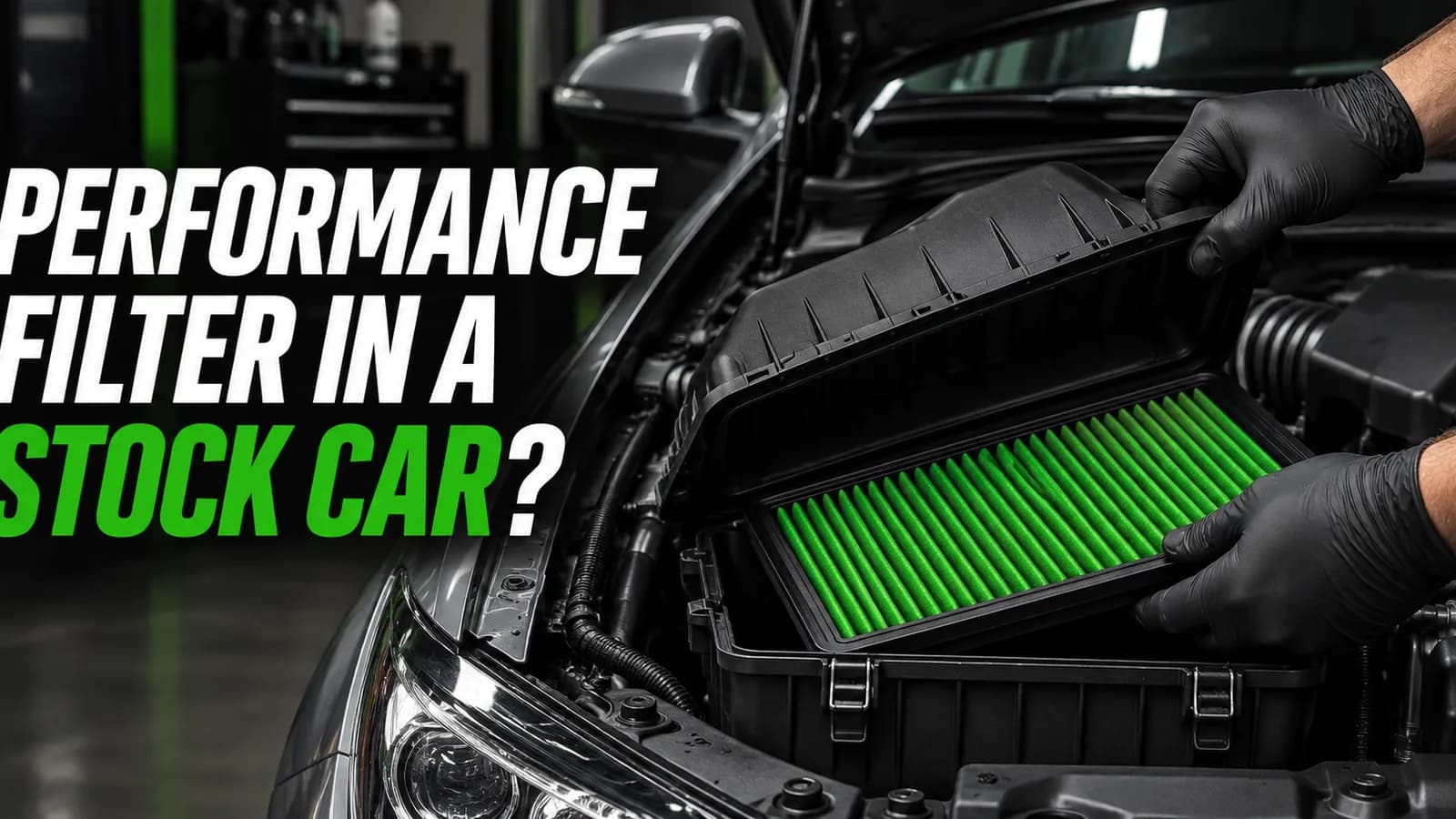
Yes, you can put a performance air filter in a stock car when the filter is designed for your exact vehicle, engine and factory airbox. Many performance panel filters are direct-fit replacements that can be installed without changing the intake system or tuning the engine.
Correct fitment remains essential. A filter that does not sit evenly or seal completely can allow air to bypass the filter media. Before ordering, confirm the vehicle’s year, make, model and engine using the Green Filter Shop by Vehicle tool.
This guide explains how performance air filters work in stock vehicles, what benefits you may realistically expect and what to check before installation.
Quick Answer
A vehicle-specific, drop-in performance air filter can normally be installed in a stock car while retaining the factory airbox and intake system. A filter change alone usually does not require an ECU tune, but the filter must fit correctly, seal completely and be maintained according to the manufacturer’s instructions.
What Is Considered a Stock Car?
A stock car is a vehicle that still uses its original factory engine, airbox, intake tubing and engine-management settings.
It may receive normal replacement parts during maintenance, but it has not undergone major performance modifications such as:
- A custom cold-air intake
- Larger intake piping
- Turbocharger or supercharger changes
- Engine remapping or ECU tuning
- Modified fuel-delivery components
- Internal engine upgrades
Replacing the filter inside the original airbox generally does not transform a stock car into a modified vehicle. It remains a routine intake-system component, provided the replacement is compatible with the original housing.
How Does a Performance Air Filter Work in a Stock Car?
A stock engine draws outside air through the airbox and filter before that air travels toward the engine.
The filter’s job is to:
- Capture dirt and road debris.
- Allow the engine to receive the airflow it requires.
- Seal the airbox so incoming air passes through the filter media.
- Protect downstream intake components from contamination.
A performance filter performs the same basic job as a standard disposable filter. The primary differences may include its media, construction, airflow characteristics and maintenance requirements.
Many Green Filter applications use washable, reusable media designed for repeated servicing. For a broader explanation, read the guide to high-performance air filters for cars.
Does a Stock Car Need Modifications for a Performance Filter?
A direct-fit performance filter normally does not require permanent modifications when it is specifically designed for the factory airbox.
You should not need to cut the airbox, alter the intake tube or force the housing closed. If the filter does not sit properly, stop and check the part number and vehicle application.
Universal filters are different. They may require measurements, mounting hardware, intake adapters and adequate clearance. They should not be selected only because their shape appears similar to the original filter.
Does a Performance Air Filter Require an ECU Tune?
A direct-fit filter installed inside the stock airbox usually does not require an ECU tune because it retains the original intake layout.
However, tuning requirements can differ when a vehicle has:
- A redesigned intake system
- Larger intake tubing
- Changes to airflow-sensor placement
- Turbocharger or supercharger modifications
- Other engine or fuel-system upgrades
- Vehicle-specific manufacturer requirements
Always follow the instructions provided for the vehicle and filter application. If the car develops a warning light, unstable idle or unusual behavior after installation, inspect the fitment and connections and have any diagnostic codes properly checked.
What Benefits Can a Performance Filter Offer in a Stock Car?
Reusable Construction
A washable performance filter can be cleaned, serviced and reinstalled rather than routinely discarded.
This can be useful for drivers who plan to keep their vehicles long term and are comfortable following the required cleaning process.
Factory Airbox Retention
A drop-in filter allows the vehicle to retain the original airbox, mounting points and intake layout.
That makes it a practical option for drivers who want a simple filter upgrade without rebuilding the intake system.
Performance-Oriented Airflow
A high-flow filter is designed to support airflow while continuing to capture incoming contaminants. Actual results depend on the vehicle, factory intake design and condition of the filter being replaced.
Learn more about the relationship between filtration, restriction and engine demand in the air filter airflow and resistance guide.
Long-Term Service
Green Filter products are designed for long-term reuse when correctly cleaned and maintained. Green Filter also provides a Limited Lifetime Warranty subject to its current conditions and maintenance requirements.
Review the full Green Filter warranty information before purchasing.
What Should You Realistically Expect?
A performance filter should be selected for fitment, filtration, serviceability and airflow characteristics. It should not be purchased based on a guaranteed horsepower or fuel-economy number.
Results vary according to:
- Existing filter condition
- Factory airbox efficiency
- Engine airflow demand
- Intake-system design
- Vehicle modifications
- Filter size and sealing
- Driving conditions
- Testing method
Research presented by the U.S. Department of Energy found that severe filter clogging reduced full-power acceleration in the tested vehicles. The same research did not find a measurable fuel-economy improvement from replacing clogged filters in the modern gasoline and diesel vehicles tested. Older carbureted vehicles behaved differently. Read the Department of Energy research summary.
Therefore, avoid treating a performance filter as a guaranteed horsepower or MPG modification.
How to Choose the Correct Performance Filter
1. Confirm the Exact Vehicle
Check the year, make, model and engine. Vehicles sharing the same model name may use different filters because of engine or airbox changes.
2. Use a Vehicle-Specific Lookup
Use the Shop by Vehicle tool to locate compatible applications.
3. Verify the Product Details
Review the product page and confirm:
- Vehicle years
- Engine size
- Filter part number
- Intake application
- Filter shape and dimensions
- Maintenance requirements
4. Check the Airbox
Before installation, inspect the airbox for:
- Cracks or warped edges
- Damaged clips
- Missing fasteners
- Dirt or leaves
- Loose intake connections
- A damaged sealing surface
5. Confirm a Complete Seal
The filter should sit evenly inside the housing. The airbox should close normally without excessive force.
A high-flow filter cannot protect the engine correctly if unfiltered air can pass around its frame.
How to Install a Drop-In Performance Air Filter
Installation varies by vehicle, so follow the owner’s manual and product instructions. A typical process includes:
- Turn off the engine and allow the vehicle to cool.
- Locate the factory airbox.
- Release the clips or fasteners.
- Remove the existing filter carefully.
- Remove loose debris from the airbox without pushing it into the intake.
- Place the new filter in the correct orientation.
- Check that the sealing edge sits flat.
- Close and secure the airbox.
- Check nearby intake hoses and electrical connections.
- Start the engine and confirm normal operation.
Do not force the airbox closed. Resistance may indicate incorrect placement or an incompatible filter.
Common Installation Mistakes
Avoid these common problems:
- Ordering by shape instead of exact vehicle fitment
- Installing the filter in the wrong orientation
- Leaving debris inside the airbox
- Pinching or folding the sealing edge
- Failing to secure every airbox clip
- Disconnecting an intake sensor and not reconnecting it
- Applying extra oil to a new pretreated filter
- Using an unapproved cleaner or oil
- Ignoring an existing warning light
Proper installation matters as much as the filter design.
How to Maintain a Reusable Performance Filter
Green Filter recommends inspecting the filter during routine maintenance and around oil-change intervals. Under normal driving conditions, cleaning is generally recommended at approximately 30,000 miles. Dusty, off-road or unusually dirty conditions may require earlier service.
The maintenance process includes:
- Remove loose dirt carefully.
- Apply the approved filter cleaner.
- Allow the cleaner to soak as directed.
- Rinse gently from the clean side toward the dirty side.
- Let the filter air-dry completely.
- Apply the recommended amount of filter oil.
- Reinstall the filter and confirm a complete seal.
Follow Green Filter’s reusable air filter cleaning guide and use the approved Cleaner & Care system.
Do not use compressed air, high-pressure water, strong household detergent, direct heat or unapproved oil.
Will a Performance Air Filter Void the Car’s Warranty?
Using an aftermarket part does not automatically cancel a vehicle’s complete warranty.
The U.S. Federal Trade Commission states that a vehicle warranty generally remains in effect when aftermarket parts are used. However, coverage for related damage may be denied if an aftermarket part is defective, installed incorrectly or causes the damage.
Keep the purchase receipt and maintenance records, follow the product instructions and review the specific vehicle and filter warranty terms. Read the FTC’s official guidance on auto warranties and aftermarket parts. Consumer Advice
Who Should Consider a Performance Filter for a Stock Car?
A vehicle-specific reusable filter may suit drivers who:
- Want to keep the factory airbox
- Prefer a washable filter
- Plan to retain their vehicle long term
- Are willing to perform periodic maintenance
- Want a direct-fit option
- Value USA-made automotive products
- Understand that results vary by vehicle
Green High Performance Air Filters are made in the USA and are available for many cars, trucks and specialty applications.
When Should You Avoid Installing One?
Delay installation when:
- You cannot confirm vehicle compatibility
- The airbox is damaged
- The engine already has an unresolved warning light
- The intake hose is cracked or loose
- The filter does not sit evenly
- You are unwilling to follow the maintenance process
- The product instructions conflict with the vehicle manufacturer’s requirements
Resolve existing intake or engine problems before treating the filter as an upgrade.
Final Answer
You can put a performance air filter in a stock car when it is designed for the exact vehicle and fits the factory airbox correctly.
A vehicle-specific drop-in filter generally allows you to retain the factory intake system without permanent modifications or an ECU tune. The filter must seal completely and receive proper maintenance.
Performance results vary, so choose a filter for correct fitment, reliable filtration, reusable construction and appropriate airflow rather than expecting a guaranteed horsepower or fuel-economy increase.
Ready to check compatibility? Use Green Filter’s Shop by Vehicle tool to search by year, make, model and engine.
Frequently Asked Questions
Can you use a high-flow air filter on a stock engine?
Yes. A compatible high-flow filter can be used on a stock engine when it fits the original airbox and seals correctly.
Does a performance air filter fit a factory airbox?
Many vehicle-specific panel filters are designed as direct-fit replacements for compatible factory airboxes. Always verify the exact vehicle and engine before ordering.
Does a drop-in performance filter need an ECU tune?
Usually no. A vehicle-specific drop-in filter that retains the factory airbox and intake layout normally does not require tuning. Larger intake modifications may have different requirements.
Will a performance air filter add horsepower?
It may support airflow when the existing filter or intake creates a meaningful restriction, but no guaranteed horsepower increase applies to every vehicle.
Can a performance filter improve gas mileage?
Do not expect a guaranteed MPG increase. Fuel economy depends on several factors, and DOE testing found no measurable improvement from replacing clogged filters in the modern vehicles tested.
How often should a reusable Green Filter be cleaned?
Green Filter generally recommends inspection around every oil change and cleaning at approximately 30,000 miles under normal conditions. Dirty environments may require earlier service.
Where can I find the correct filter for my stock car?
Use the Green Filter vehicle finder and enter the exact year, make, model and engine.

Comments
Be the first to leave a comment.
Leave a Comment