

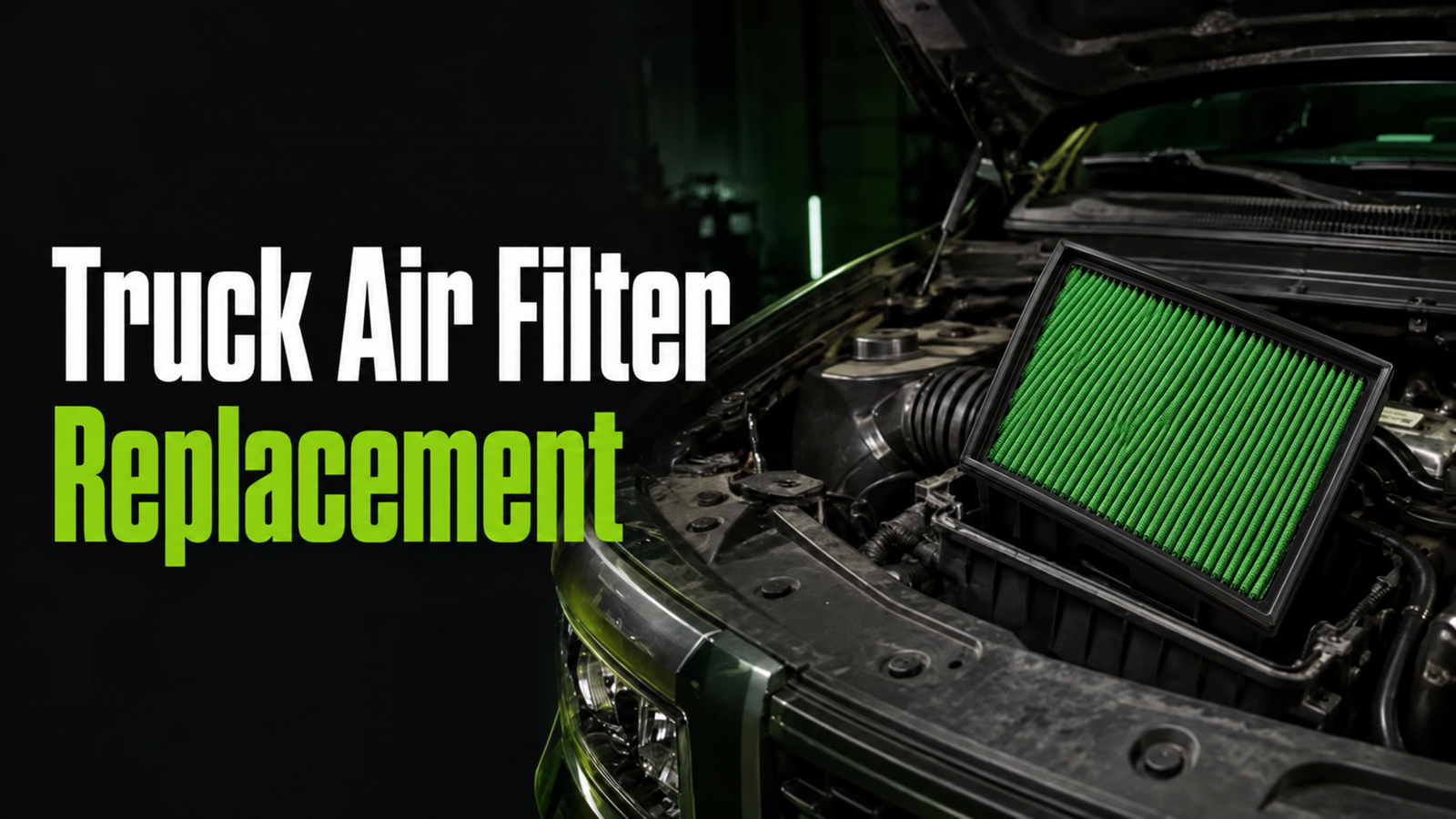
When Should You Clean or Replace a Truck Air Filter?
A disposable truck engine air filter should be inspected and replaced according to the truck manufacturer's maintenance schedule and actual filter condition. A washable reusable filter is serviced differently: instead of automatically replacing it when dirty, you clean and maintain it according to the filter manufacturer's instructions. Driving environment matters, too. A pickup used on dusty job sites, dirt roads, farms, or off-road trails may need air-filter attention sooner than a truck used mostly on clean paved highways.
Why Truck Engine Air Filters Need Regular Attention
Pickup trucks often operate in environments that expose the intake system to more airborne debris than typical highway driving. Examples include:
- Gravel and dirt roads
- Construction sites
- Farms and ranches
- Desert environments
- Off-road trails
- Dusty worksites
As the filter collects contaminants, it should be inspected according to the vehicle and filter manufacturer's recommendations.
The goal is not to replace a filter simply because a certain mileage number appears on the odometer. The goal is to make sure the filter remains in serviceable condition, fits correctly, and continues protecting the engine's incoming air supply.
How Often Should You Replace a Truck Air Filter?
There is no universal mileage interval for every pickup. Truck manufacturers use different maintenance schedules, filter designs, engines, and service-monitoring systems.
For example, Chevrolet's U.S. maintenance guidance says an engine air filter may commonly need replacement around 12,000 to 15,000 miles, while also directing owners to the specific vehicle's owner's manual for the correct service schedule. Chevrolet's maintenance guidance should therefore be treated as general guidance rather than a rule for every truck.
Ford takes a vehicle-specific approach as well. Current Ford truck documentation tells owners to replace the engine air-filter element at the scheduled maintenance interval, and some Ford trucks may use an engine air-filter maintenance minder that accounts for driving habits and environmental conditions. Ford's official truck air-filter guidance also emphasizes inspecting the filter and housing for damage or debris.
Best Practice
Check the maintenance schedule for your exact year, make, model, and engine instead of relying on one universal mileage number.
When Should a Truck Air Filter Be Inspected Sooner?
A mileage schedule is only part of the story. You should consider checking the filter sooner if your truck regularly operates in:
- Heavy dust
- Sand
- Unpaved-road conditions
- Off-road environments
- Construction or industrial areas
- Agricultural settings
Visible contamination is one of the most useful reasons to inspect the filter. Also check the filter for:
- Torn or damaged media
- A damaged sealing surface
- Debris inside the airbox
- Incorrect seating
- Cracks, holes, or other physical damage
Ford's current truck service instructions specifically tell owners to inspect the filter for damage and check the air-filter housing for dirt and debris before reassembly.
Disposable vs. Reusable Truck Air Filters
The correct service decision depends heavily on the type of filter installed.
Disposable Air Filters
Most conventional paper-style truck air filters are designed to be replaced rather than washed. When the filter reaches its service interval, becomes damaged, or is no longer suitable for continued use, it is removed and a new filter is installed. Do not wash a disposable filter unless its manufacturer specifically says the product is washable.
Washable Reusable Air Filters
A reusable engine air filter follows a different maintenance cycle. Instead of routinely throwing the filter away when it collects dirt, a serviceable filter can be cleaned and returned to use when maintained correctly.
Green Filter recommends visually inspecting its reusable High Performance Air Filters at every oil change. Under normal conditions, the company recommends cleaning approximately every 30,000 miles, with more frequent cleaning when operating in dusty environments. Green Filter's official FAQ provides the current maintenance guidance.
For Green Filter products, cleaning is followed by proper drying and re-oiling using the recommended filter oil. The Green Filter Cleaner & Care guide explains the service process.
How to Check a Truck Engine Air Filter
The exact procedure differs between trucks, so always check your owner's manual first. In general, the process looks like this:
- Turn the engine off and allow the vehicle to sit safely.
- Locate the engine air-filter housing.
- Remove the clips, screws, or fasteners securing the housing.
- Carefully remove the filter.
- Inspect the filter media and sealing surfaces.
- Check the inside of the airbox for loose dirt or debris.
- Replace or service the filter as appropriate.
- Reinstall the filter in the correct orientation.
- Make sure the housing closes and seals correctly.
Important
Do not allow dirt, tools, or other foreign material to fall into the open intake while the filter is removed. Ford specifically warns against operating an engine with the air cleaner removed and emphasizes preventing foreign material from entering the induction system during service.
Why Correct Truck Air Filter Fitment Matters
A truck air filter needs more than roughly similar dimensions. It must sit correctly inside the airbox and seal around the intended surface. A filter that is too small, incorrectly positioned, or damaged around the seal may allow air to bypass the filter media.
That is why you should confirm:
- Model year
- Manufacturer
- Truck model
- Engine
- Intake configuration
before ordering a replacement. If your truck still uses its stock intake system, Green Filter's Shop by Vehicle tool can be used to search by year, make, model, and engine.
Green Filter also has dedicated application pages for Ford truck air filters and RAM truck air filters. Current Green Filter listings include truck-specific applications rather than treating every pickup as using the same filter.
What If Your Truck Has a Modified Intake?
Vehicle lookup is most useful when the truck still uses the factory-style airbox. If your pickup has:
- An aftermarket intake
- A custom intake tube
- A different airbox
- A universal cone filter
the factory vehicle application may no longer identify the filter currently installed. In that situation, check the existing filter part number or measure the filter according to the intake manufacturer's requirements.
If you already know an existing part number, Green Filter's air filter cross-reference tool can help identify a corresponding Green Filter application.
Should You Replace a Reusable Green Filter When It Gets Dirty?
Normally, dirt alone does not mean a reusable Green Filter needs to be discarded. Green Filter's reusable filters are designed to be cleaned and returned to service when maintained properly. The company recommends inspection during oil-change intervals and cleaning according to condition and driving environment.
A reusable filter should receive closer attention if you find physical damage such as:
- Torn media
- Damaged sealing material
- Structural damage
- A condition that prevents the filter from fitting or sealing correctly
For normal dirt buildup, follow the correct service procedure instead of automatically replacing the filter. See How to Clean a Reusable Air Filter for the full cleaning process.
Truck Air Filter Replacement: The Bottom Line
Truck engine air-filter maintenance should be based on your specific vehicle, filter type, and driving environment. A disposable filter should be replaced according to the truck manufacturer's service guidance and filter condition. A washable reusable filter follows a different process: inspect it regularly, clean it when required, and service it according to the filter manufacturer's instructions.
If your pickup spends significant time in dusty, off-road, agricultural, or worksite conditions, inspect the filter more often rather than assuming a normal highway-driving interval will always apply.
Most importantly, use the correct filter for your exact year, make, model, and engine and make sure it seats and seals properly after service.







Comments
Loading comments...
Leave a Comment